

The Pros & Cons of Coal Stoves

While there are many options for home heating, homeowners in certain parts of the country may consider a coal stove as one of their top choices. Most coal stoves are similar to wood-burning stoves and require a chimney to dispense their smoke. Homeowners who want to install a coal stove should examine both the pros and cons of such a heating system. For some, the benefits may outweigh any potential drawbacks. Other homeowners, however, may find that alternative home heating options are actually a better choice for their home.
Pro: Cost Efffective
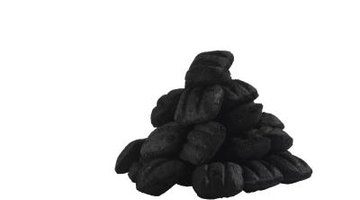
One of the most significant benefits of coal stoves is that they are usually cheaper to run than other fuel-type stoves, such as wood stoves, gas stoves, pellet stoves and electric stoves. Coal is particularly inexpensive in areas of the country where it is readily available, such as the Northeast. In addition, because coal is a powerful, dense fuel, it burns extremely efficiently and can produce more heat per ton than wood or pellets.
Pro: Burn Time
Coal stoves have a longer burn time than other types of fuel stoves. Some coal stoves can generate heat for 18 to 24 hours per fuel load, which is a longer burn time than wood. A coal stove may also be equipped with an automatic stoker that enables it to burn even longer at lower temperatures.
Pro: Clean Burning
Coal stoves are clean burning, so they do not produce any visible smoke. Hard coal, or anthracite, gives off less carbon dioxide than other grades of coal, making it a preferred option for many homeowners.
Pro: Easy to Store Fuel
Coal is typically easier to store than wood and other types of fuel. It is waterproof and not prone to insect infestations, so it can easily be stored outside. Some homeowners keep their coal in outdoor bins while others store the fuel in their garage, basement or utility area.
Con: Fuel Not Available Everywhere
The majority of hard coal mined in the U.S. is found in eastern Pennsylvania. As a result, it is not readily available in many parts of the country. In these areas, a coal stove may have higher operating costs because the fuel is not easy to come by.
Con: Non-renewable Energy Source
The anthracite used in most coal stoves is a nonrenewable energy source. As a result, using anthracite is not an environmentally-friendly method of heating a house. Many homeowners prefer alternative energy sources that place less of a burden on natural resources.
Con: Corrosive
As coal burns, it produces sulfur, fly ash and other active compounds that may corrode certain types of chimneys and metal pipes. In particular, stainless steel chimneys are susceptible to corrosion when connected to a coal stove. To avoid this, homeowners must clean their chimney every spring because corrosion typically occurs during the summer when the weather becomes more humid.
Con: Lighting Difficulty
Typically, starting a fire in a coal stove is more difficult than in a wood or pellet stove. Many homeowners find the process frustrating, particularly if they have little to no experience with this type of stove. Because they are so difficult to start, coal stoves are typically run full time to eliminate the need for restarting.
References
Writer Bio
Based in New York City, Jennifer Blair has been covering all things home and garden since 2001. Her writing has appeared on BobVila.com, World Lifestyle, and House Logic. Blair holds a Bachelor of Arts in Writing Seminars from the Johns Hopkins University in Baltimore, Maryland.
Photo Credits
- Thomas Northcut/Photodisc/Getty Images
More Articles

