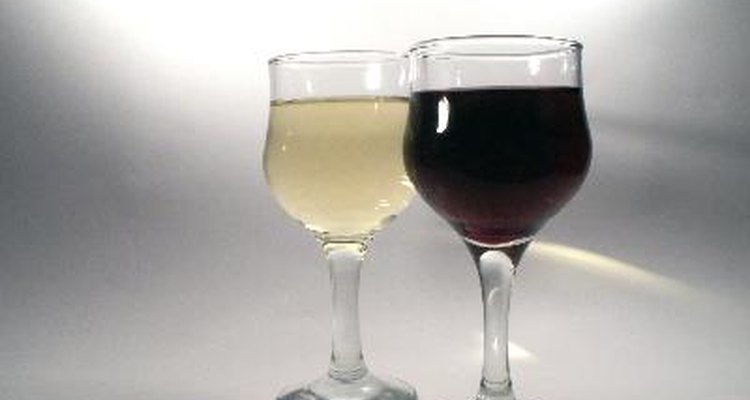
Tannin is the substance in wine that creates an astringent, dry mouth feel. Tannins occur naturally in grape skins and stems, as well as in many other plants. The amount of tannin naturally occurring in wine depends on the grape skin’s thickness and time of the must’s exposure to the skins. Since some grapes have thin skins and white wines are not fermented with grape skins at all, tannins are lacking in many wines. Because of this, tannin powder can be added to the must at the start of fermentation to add a drier mouth feel to the finished wine.
Sanitize a measuring spoon, glass jar and long plastic stirring tool. This can be done by either boiling them or using a winemaking sanitizer, such as potassium metabisulfate, mixed with water according to label directions.
Measure the recommended amount of tannin powder for the amount of must you have. Different brands of tannin powder have different mixing instructions, and the type of grapes or other fruit in your must also impacts the amount of tannin recommended. However, generally the dosage is between 1/8 and 1½ teaspoons per gallon of must.
Fill a quart jar half full of water and heat until it is very warm. Sprinkle the tannin powder into the water and stir until the powder is dissolved.
Pour the tannin solution into the wine must and stir well with a plastic stirring tool. After adding the tannin, continue to ferment the must normally and complete the winemaking process.
Related Articles
How Much Is a Single Serving Size of a ...
What Is the Primary Difference Between ...
Types of Bacteria in Wine

Types of Wine Listed Alphabetically
Types of Amber Wine
How to Make Apples Into Wine in 21 Days
Why Does Wine Not Expire?

How to Use Bentonite for Clearing Wine

What Is the Difference Between Wine & ...
The Danger of Storing Hard Cider in ...

List of the Different Types of Champagne

Brandy vs. Whiskey
How to Reduce Wine With Sugar to a Glaze
How to Make Hard Cider With Baking Yeast
How to Calculate Alcohol Content in Wine
Is Cabernet Sauvignon a Substitute for ...
What Happens to the Alcohol ...

How to Make Sand Plum Wine

How to Make Alcohol at Home
Herring in Wine Sauce
References
Writer Bio
Karren Doll Tolliver holds a Bachelor of English from Mississippi University for Women and a CELTA teaching certificate from Akcent Language School in Prague. Also a photographer, she records adventures by camera, combining photos with journals in her blogs. Her latest book, "A Travel for Taste: Germany," was published in 2015.
Photo Credits
Red wine and white wine image by cosma from Fotolia.com