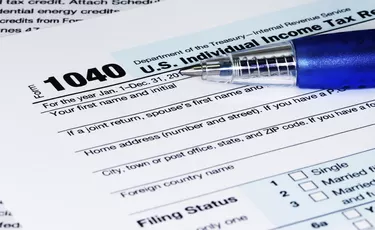
IRS Form 1040 Instructions
Internal Revenue Service (IRS) Form 1040 is available for download at the IRS website, along with other IRS forms and publications. The instruction books are voluminous so obtaining a print version of the publications is recommended. Married and individual taxpayers will find the table of contents to be useful in getting an overview of the contents of the publications. Individual taxpayers will find that all of the forms necessary for filing are in the 1040 Forms & Instructions book.
Things You'll Need
- Tax forms (Form 1040)
- IRS Form 1040 instructions
- Proof of income
- Receipts
Instructions
-
-
1
Peruse the forms and instructions (including Form 1040) to get an outline of the documents that you will need to complete Form 1040 and any necessary attachments.
-
2
Identify your filing status from the five options contained in the "Filing Status" section of Form 1040.
-
-
3
Check the appropriate box/boxes in the "Exemptions" portion of Form 1040. You should list yourself (unless someone else is claiming you as a dependent on their tax return), your spouse (if any), and describe the number, names and nature of any dependents you are claiming.
-
4
Complete lines 7 through 22 in the "Income" portion of Form 1040. You will need a copy of your W-2s. You must list all sources of income in this section. Items included relate to wages, Schedule C (self-employment) net income, interest, Social Security income, pensions, investments, dividends and capital gains, along with other income information.
-
5
List and deduct gross income adjustments in lines 23 through 37. Major items will include moving expenses, health insurance savings accounts, self-employment taxes paid, alimony, student loan interest, tuition and fee deductions.
-
6
Complete the "Taxes and Credits" portion of page 2. You should check appropriate boxes if you or your spouse were born before Jan. 2, 1945, and the box for blind taxpayers, if applicable. You must enter either the standard deduction(s) or the itemized amounts contained on Form 1040-A. The exemptions you claimed on page 1 of Form 1040 will determine the total net income from which you will determine the taxes that you must pay. Your net taxable income is determined by subtracting the credits from your adjusted gross income, but not less than zero.
-
7
List self-employment taxes and any other taxes owed ("Other Taxes").
-
8
Attach Schedule EIC (Earned Income Credit), if you have a qualifying child. From the 1040 Instructions book worksheet in the "Payments" section of Form 1040, determine how much you can claim as an EIC credit against any taxes owed.
-
9
List the amount of your refund or net taxes owed, if any. You can also choose to have your refund (if any) deposited directly into your savings or checking account.
-
10
Sign your Form 1040. If you are married and filing jointly, your spouse needs to also sign Form 1040. If you had assistance from another person in completing your Form 1040, the preparer needs to complete and sign the section titled "Paid Preparer's Use Only" portion of Form 1040 at the bottom of page 2.
-
11
Locate the address where you must file your return. Mail your Form 1040, other forms, attachments, and check for taxes owed (if any) to the appropriate IRS Processing Center listed in the IRS Forms and Instructions book. Keep copies of all documents and forms submitted.
-
1
Tips & Warnings
It is a good idea to obtain several copies of Form 1040 and worksheets in case corrections are needed prior to filing.
References
Resources
- Photo Credit tax forms image by Chad McDermott from Fotolia.com