

How to Cover a Septic Tank Lid

Residences that do not have access to a municipal sewer system will need to install a septic system. The primary component of the system is the septic tank. This tank will be attached to the drain from your home as well as the field lines of your septic system. The tank will be buried approximately 24 inches deep. It must be protected from damage from surface objects such as vehicle traffic and large trees or shrubbery.
-
Check all connections before covering your septic tank. Caulk around the inlet pipe from your home as well as the pipe going out to the field lines. You want to establish a water-tight seal around both of these pipes. If the tank has any visible seams, be certain these are also well-caulked before covering the tank. You do not want water seeping into or out of the septic tank.
-
Check the seals around the access port. An access port should extend above ground level. This port will allow you to check the tank for damage and to determine if pumping needs to be done. If no access port exists, you may want to consider purchasing a kit and installing one before covering the tank. On average, it costs $350 to $500 in 2010 to have your tank pumped out. If the tank must located and dug up to pump it out, this cost goes up considerably.
-
Shovel or scoop soil into the hole. Work slowly when filling in around the pipe connections and access port. A large amount of dirt dropped from even a small height can damage or dislodge a pipe and result in a leak or allow debris to enter the tank. Completely fill the hole, lightly pack the dirt as you proceed. Leave a small mound atop the tank to allow for settling.
-
Plant grass in the new soil to help control erosion of the loose soil. Do not plant any trees or large shrubs over the septic tank. The roots from these will eventually grow deep enough to cause problems with the tank's function.
References
Warnings
- Do not allow the backhoe or any other vehicle to drive over the septic tank, the pipes or the field lines. The weight of these vehicles can result in crushed pipes, cracked septic tanks and costly repairs.
Writer Bio
Tom Raley is a freelance writer living in central Arkansas. He has been writing for more than 20 years and his short stories and articles have appeared in more than 25 different publications including P.I. Magazine, Pulsar and Writer's Digest.
Photo Credits
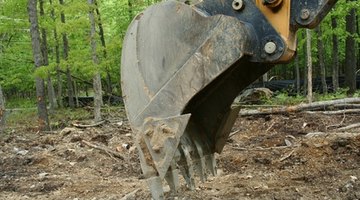
- backhoe bucket image by Jim Mills from Fotolia.com
More Articles

