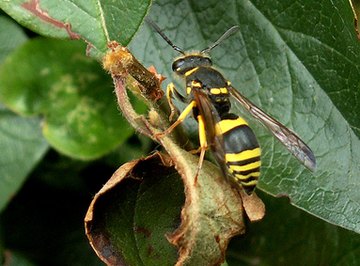
Wasps are a part of the same order as bees and ants, called Hymenoptera, which means “transparent wing.” Any insect that is a part of this order and is not a bee or an ant is a wasp; many types of wasps exist, and many times they are mistaken for bees. The two large categories into which wasps are divided are solitary wasps and social wasps. Most solitary wasps do not nest; social wasps build nests in places such as trees, attics, porch overhangs and openings in buildings.
Physical Identification
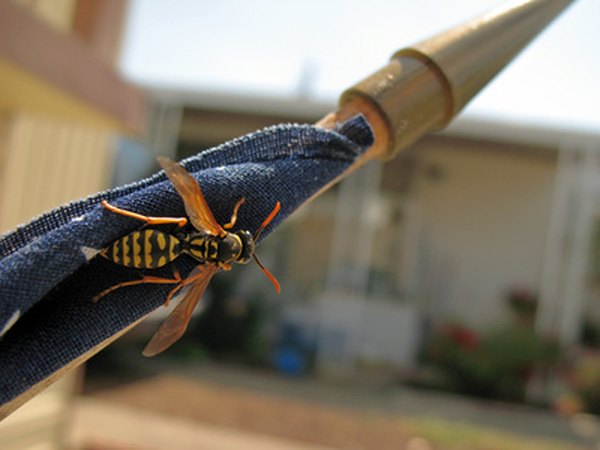
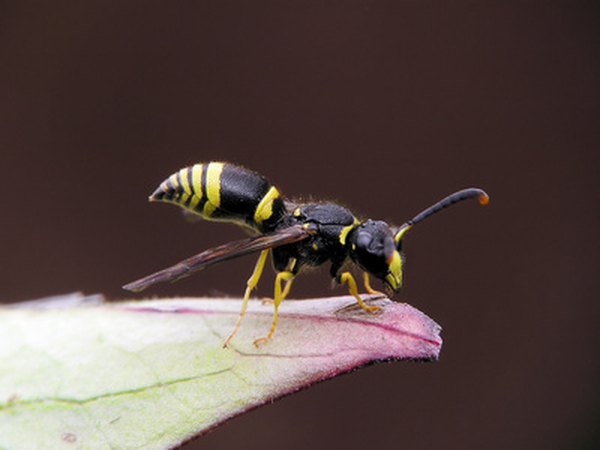
Most wasps have two pairs of wings--one pair of larger front wings and one pair of smaller hind wings. Most female wasps have a stinger that contains venom. As opposed to bees, most wasps do not have much hair on their bodies. Some wasps can land on water and nest near bodies of water, though most are terrestrial. Some wasps are completely black and some, including hornets and the common yellowjacket, have yellow stripes.
Types
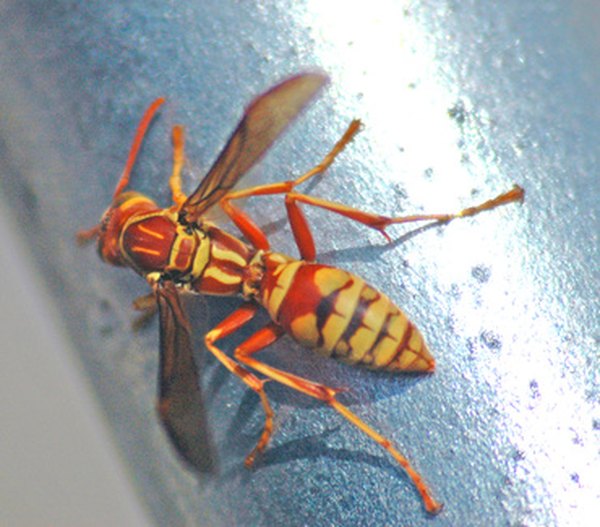
Besides yellowjackets (common in North America) and hornets, the wasp family includes “velvet ants,” which are black and red, paper wasps, mud daubers, pollen wasps and spider wasps as well as several other kinds. Most of these species have long, slender bodies, and many have bright yellow markings.
Differences Between Bees and Wasps
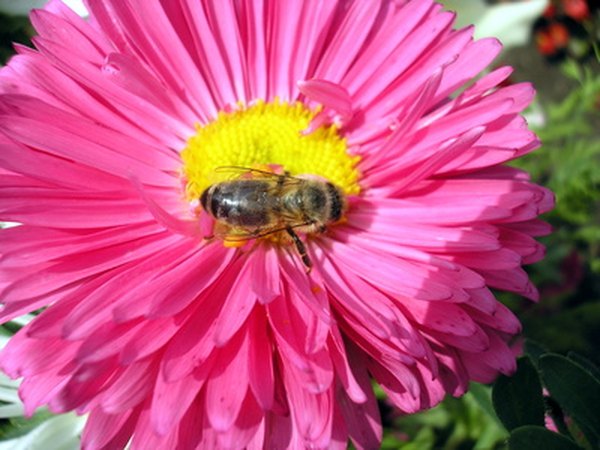
Many people confuse bees with wasps. One of the most significant differences between the two is their eating habit: Bees consume plant nectar, but wasps feed mostly on small insects. Wasps do not have as many hairs on their body as bees because they have no need to use hair to transport pollen. Both female bees and wasps have a venomous sting; wasps usually sting to stun prey, and bees use a sting as a defense mechanism for their hives. While bees usually die after stinging, wasps and hornets can sting multiple times.
Social Wasp Nests
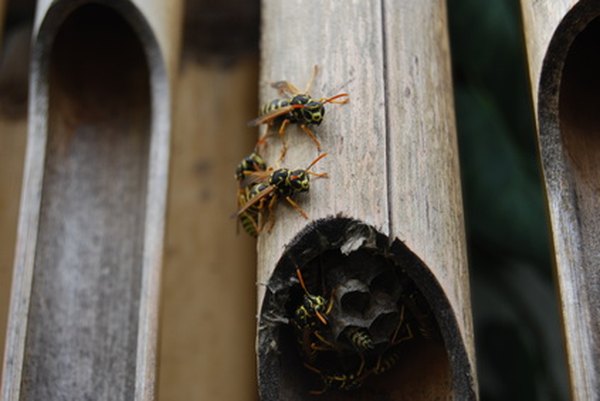
Social wasps nest in places that are sheltered but partially outdoors. Unlike bees, they do not produce wax but instead make their nests with gathered wood fibers that they chew to soften. This wood pulp becomes the nest's chambers, compartments for eggs and immature wasps. These colonies are grayish in color.
Wasp Stings
When wasps sting people, the following symptoms usually occur: redness at the site of the sting, immediate pain, and swelling and itching. If someone is allergic to wasps, she might exhibit hives, shortness of breath, swelling of the mouth or throat, vomiting, nausea and low blood pressure. If that occurs, the person should seek immediate medical attention. Though no antidote for insect venom is available, several steps can help to alleviate the sting, including removing the stinger, placing ice on the sting; taking allergy medication such as Benadryl or Claritin to lessen itching, and taking a pain reliever. The area of the sting should be washed and covered with an antibiotic ointment.
References
Resources
About the Author
Jenny Molberg is a Texas native who has worked as an assistant editor at a literary magazine and her poems have been published in several nationally recognized journals. She holds a Master of Fine Arts in creative writing.
Photo Credits
wasp image by Henryk Olszewski from Fotolia.com