

How to Install Vinyl Sheet Flooring With Double-Sided Tape

Using double-sided tape is a quick way to install vinyl sheet flooring. This means you don't have to bother with messy adhesives and other tools. Vinyl flooring is durable and comes in many colors and patterns. It is useful in bathrooms, kitchens or any room where you desire flooring that requires little maintenance. Although the vinyl flooring is cumbersome to handle, installing it with double-sided tape is relatively simple to do.
Step 1
Sweep the room where you want to install the vinyl sheet flooring. Any dirt and debris on the surface may prevent the double-sided tape from adhering well.
Step 2
Make a pattern of your floor with butcher paper, cellophane tape and scissors. If your floor has a simple plan without any curves or angles, this step is not necessary.
Step 3
Place the pattern on top of the vinyl sheet flooring. Do this in a large work area, such as the garage or family room. This makes it easier to cut out the pattern. If any seams are necessary, position them out of walkways or the main traffic flow in the room.
Step 4
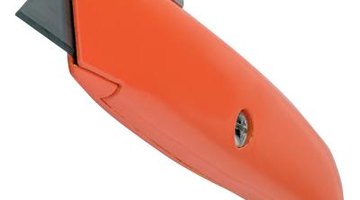
Cut out the vinyl flooring with a utility knife, leaving an extra 3 inches around the pattern perimeter. You will cut this section off of the vinyl flooring later. If seams are necessary, overlap the edges by 1 inch and tape them together with masking tape. Cut through both pieces of the vinyl at the seam.
Step 5
Place the seam edges together and secure them with masking tape.
Step 6
Roll up the flooring and transport it to the room where you are installing it.
Step 7
Unroll the vinyl sheet in the room and line it up carefully within the space.
Step 8
Cut off any excess vinyl with the utility knife. Follow the directions that came with the flooring when doing this. It may require room for expansion, depending on the brand you purchased.
Step 9
Lay the double-sided tape along each wall and cut it to fit the vinyl.
Step 10
Lift up the edge of the vinyl flooring along one wall. Peel off one side of the backing from the double-sided tape and press it into place on the bottom of the vinyl.
Step 11
Remove the other backing from the double-sided tape and press it carefully into the floor. Do this on all of the perimeter.
Step 12
Place a piece of double-sided tape underneath any seams but do not remove the backing that touches the floor. Use a seam sealer kit to finish the seam areas.
Step 13
Use a seam roller to smooth down the areas over the tape. This ensures proper adhesion. Another option is to wrap a towel around the end of a broom handle and rub it over the seams.
References
Tips
- Use acrylic double-sided tape for the best results with the vinyl sheet flooring.
- It is a good idea to make a large "X" shape with the double-sided tape underneath refrigerators or other appliances. This helps keep the vinyl securely in place if you move the heavy appliance.
- Lay your vinyl out flat approximately 24 hours before the installation. This allows it to relax and makes it easier to install. If you do not have space to unroll it, release the bindings and leave it in a loose roll.
- Invest in threshold strips to cover seams in doorways.
Writer Bio
Chelsea Fitzgerald covers topics related to family, health, green living and travel. Before her writing career, she worked in the medical field for 21 years. Fitzgerald studied education at the University of Arkansas and University of Memphis.
Photo Credits
- Brand X Pictures/Brand X Pictures/Getty Images
More Articles

