
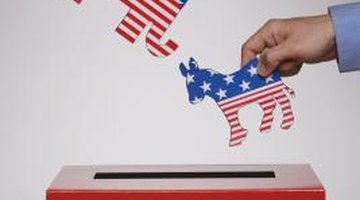

State primary elections narrow the field of candidates to a single person to represent the political party during the general election. New Hampshire stakes out the claim to the first national presidential primary. A congressional caucus selected the presidential and vice-presidential candidates until 1831, when the duties shifted to a national political convention. New Hampshire first chose delegates from town caucuses to represent local interests at the state convention. While some states continue to use the caucus format, others now use a general election for each party primary.
Caucus or Primary
Not all states use the primary system to select party candidates. These states use the caucus system where party leaders meet and choose the candidate to represent the party in the general election. Proponents of the primary claim this system allows the people a direct voice in the selection of the party's candidate and challenge the caucus selection as representing only the interests of the party elite and those who attend the caucus. Advocates of the caucus system use primary candidates selected by the people who lack the training or experience to win the general election as a negative of the system.
Primary Field
The primary ballot lists only the candidates identifying with the party, and most states run closed primaries that require voters to register with a single party to select from a field of candidates listed to represent that party. Some states, however, open the primary to candidates from any party. Republicans, for example, can vote for a Democratic candidate in states that allow cross-filing primaries. Winners capturing the majority of votes in multiple party primary ballots automatically carry the general election.
Primary Vote Division
State primaries divide the ballots according to a proportional or winner-take-all policy. Some state laws require the primary winner to capture a specific percent of the popular vote to represent the party in the election. In a crowded primary field, candidates may win, but still receive a small percentage of the vote due to the large field attempting to capture the party slot. Laws in some states require a second run-off election between the top primary vote-getters on a party ticket in this situation.
Federal Elections and Vote Division
Primary elections serve as a popularity barometer for candidates for major offices. Decisive wins in primaries conducted early in the year help create momentum for a presidential candidate, for example, and some states take pride in conducting an early primary during a presidential election year. Some states in 2012 changed the presidential primary balloting in an attempt to capture the title of the state with the first election in the country.
Election Manipulation
Primary election practices sometimes open the possibilities for special interests to influence the selection of primary candidates by manipulating votes. Some states allow any voter, regardless of party registration, to select primary candidates from all of the parties listed on the primary ballot. States also frequently allow voters to change party affiliation less than a month before the primary election. Political parties intent on manipulating an election encourage the party loyal to change parties for the primary and then vote for the least desirable candidate from the opposing party.
Related Articles



References
- Maryland State Board of Elections: Voting in Primary Elections
- Scholastic Election 2012: What You Need to Know About the Primaries
- C-SPAN Classroom: Lesson Idea -- Primaries and Caucuses
- National Association of Secretaries of State: 2012 Presidential Primary/Caucus Calendar
- USC Libraries Archival Collections: Finding Aid for the Abolish Cross-Filing in California Records
- Federal Election Commission: 2012 Presidential Primary Dates and Candidate Filing Deadlines for Ballo Access
- State of New Hampshire: New Hampshire Almanac -- First-in-the-Nation
Writer Bio
Lee Grayson has worked as a freelance writer since 2000. Her articles have appeared in publications for Oxford and Harvard University presses and research publishers, including Facts On File and ABC-CLIO. Grayson holds certificates from the University of California campuses at Irvine and San Diego.