

How to Repair Plaster Over Concrete Walls

Plaster is a construction material that was used for finishing walls before drywall became widely used. As a result, many older homes, and some new homes, have plaster walls. While plaster is best applied over wooden strips, the material can also be applied directly to plywood sheets or concrete.
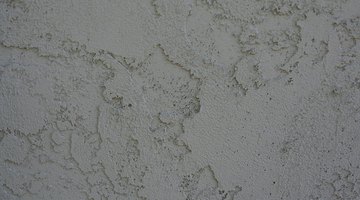
Plaster used on concrete tends not to last as long, and is susceptible to crumbling, chipping, and damage. Repairing this type of plaster is simple, and can be completed by the average homeowner in just one weekend.
Things You Will Need
- Wire brush
- Plaster mix
- Water
- Bucket
- Trowel
- Medium-grit sandpaper
- Oil-based primer
- Paint roller or brush
-
Remove any crumbling or damaged sections of plaster. The loose sections should be easy to remove by hand. Brush over these sections with a wire brush afterwards to remove any dust or debris remaining.
-
Blend a bag of plaster mix with water, according to the manufacturer's instructions. The mixture can be placed in a bucket or wheelbarrow and blended by hand with a stirring stick.
-
Apply a thin layer of the mixture, around 1/4", to any holes using a trowel. Allow this coat to dry for 2-3 hours, then repeat this process, continuing to add layers until the damaged are is level with the rest of the wall. Patching the wall in layers like this allows each layer to bond with the wall. Filling the hole all at once can cause the entire patch to fall of the wall due to the weight.
-
Wait 8 hours to allow the entire patch to dry, and then sand it so that it is level with the rest of the surface.
-
Prep the wall for painting by painting it with an oil-based primer. Water-based primers can cause the water to be sucked up into the plaster, which is very porous.
-
Paint the wall as you would any wall, using a paint brush, roller, or sprayer.
The Drip Cap
- Plaster is a construction material that was used for finishing walls before drywall became widely used.
- The loose sections should be easy to remove by hand.
- Apply a thin layer of the mixture, around 1/4", to any holes using a trowel.
- Water-based primers can cause the water to be sucked up into the plaster, which is very porous.
Writer Bio
Emily Beach works in the commercial construction industry in Maryland. She received her LEED accreditation from the U.S. Green Building Council in 2008 and is in the process of working towards an Architectural Hardware Consultant certification from the Door and Hardware Institute. She received a bachelor's degree in economics and management from Goucher College in Towson, Maryland.
Photo Credits
- Wiki Commons
- Wiki Commons
More Articles

