A phylogenetic tree is a graphic representation of evolutionary relationships that demonstrates how organisms could possibly have diverged from a common ancestor. Previously, this was done through comparison of anatomy and physiology of living organisms and fossils, but now genetic information taken from DNA nucleotide sequences is commonly used. Organisms with few similarities may be found on the separate “branches” of a phylogenetic tree and those with specific commonalities would be located on “twigs” of the same branch. A phylogenetic tree is a method for understanding species and evolutionary changes in organisms.
- Data set (i.e., nucleotide sequences, organism pictures)
- Poster board
- Glue
- Pen
- Computer (for advanced nucleotide sequence procedures only)
Choose a finite set of organisms or sequences. Pick characteristics or sequences that divide the organisms into separate groups. Have multiple characteristic supports to demonstrate organism relationships.
Phylogenetic placement can be debated based on many characteristics, and much support is required for placement choices. Mathematical equations may be necessary to demonstrate the statistical likelihood of evolutionary changes. Probability of divergence on the genetic level leaves room for possible inaccuracies in phylogenetic trees.
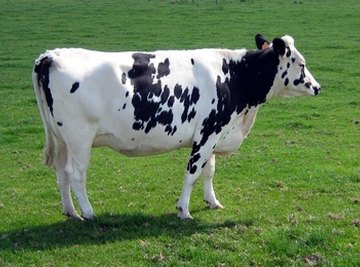
Select a model organism for relationship comparison. This can be done with a species, breed or nucleotide sequence that represents an organism. An example organism could be a cow. The rest of the tree would demonstrate how closely related a cow is to other organisms based on genetic traits.
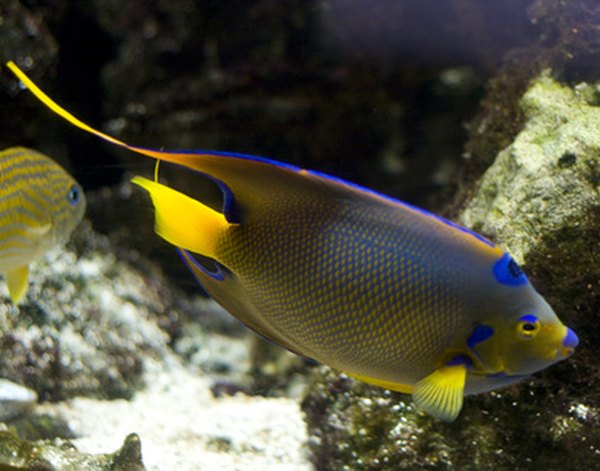
Choose an outgroup. An outgroup is a less closely related organism or vastly different nucleotide sequence. If the model organism is a cow, then a possible outgroup would be a fish. The more different two organisms are, the farther down on the phylogenetic tree will be their diverging branch point. Time is represented with the oldest date at the bottom of the chart and present day being at the top of the chart. The placement of the branches shows approximately when in the past an evolutionary trait possibly changed an ancestral organism into different species.
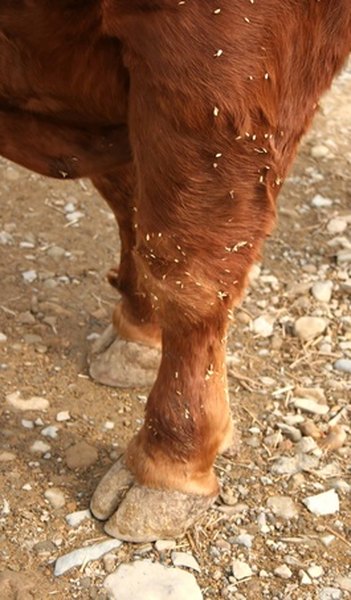
Determine a set of characteristics to use for comparison. Examples include "has four legs," "chews cud," "gives live birth" or "grows hair." Nucleotide sequences are just alphabetical representations of DNA that determines characteristics, so another option would be: "contains the sequence ATGGACACGGA."
Divide organisms based on the characteristics. When one organism does not contain the desired trait, a branch is made in the phylogenetic tree. For the characterisitic “has four legs,” cows, sheep and deer would all be on one branch, while fish would be on a separate branch. Paste the picture or sequence of a cow in the upper corner of the poster board and the fish in the opposite corner and draw two lines from them to the base of the paper in an intersecting V shape.
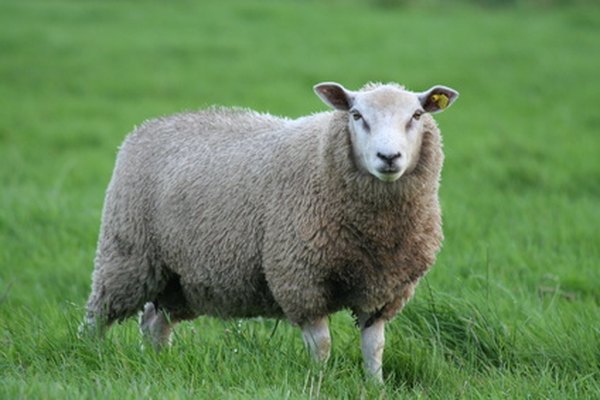
Continue separating the model organisms or nucleotide sequences until each example has a single separation from the branch into a twig. The characteristic “has wool” would separate sheep from deer and cows onto a singular branch. Place the image of the sheep near the picture of the fish and draw a line that connects in a V shape down to the branch of the cow. Using the characteristic “has fluffy tail” would demarcate cow from deer. Paste the picture of the deer between the cow and sheep and draw another line into a V shape that intersects above the fish and sheep lines. When each species has a single branch, the phylogenetic tree has been completed.
Things You'll Need
Tips
Warnings
Tips
- Choose a finite set of organisms or sequences.
- Pick characteristics or sequences that divide the organisms into separate groups.
- Have multiple characteristic supports to demonstrate organism relationships.
Warnings
- Phylogenetic placement can be debated based on many characteristics, and much support is required for placement choices. Mathematical equations may be necessary to demonstrate the statistical likelihood of evolutionary changes. Probability of divergence on the genetic level leaves room for possible inaccuracies in phylogenetic trees.
About the Author
Allia Nelson began writing professionally in 2010, with her work focusing on science articles for eHow. She holds a Bachelor of the Arts in graphic design and is pursuing a Bachelor of Science in biology and education, both from the University of Wisconsin-Whitewater.
Photo Credits
cow. cow in farm/field image by L. Shat from Fotolia.com