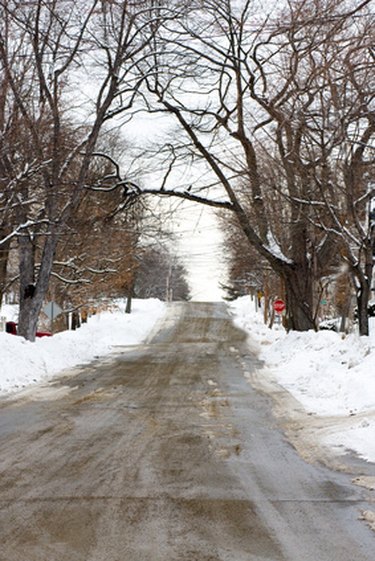
When winter precipitation falls and threatens to stop our daily lives, magnesium chloride commonly makes an appearance to keep life moving at a normal pace. As ice covers streets and sidewalks, cities apply magnesium chloride-based de-icing agents to these surfaces, and homeowners apply them to front stoops and driveways. Though magnesium chloride is effective, it can kill your plants.
Description
Video of the Day
Scientifically speaking, magnesium chloride (MgCl2) is composed of ions of magnesium and chloride that bond to form a type of salt. Available in different forms, magnesium chloride comes as granules, which are typically used for smaller areas like driveways. The liquid form is used on larger areas like streets both to inhibit the formation of ice and to treat already formed ice. Though this salt is primarily known for its use during winter storm weather, the liquid form is also applied to non-paved roads as a means of keeping dust in place, according to Colorado State University.
Video of the Day
Effects
When magnesium chloride comes into contact with plants as it splashes or runs off into plant-populated areas from streets or other treated surfaces, it typically results in the burning and death of plant material. When the salt enters the plant, the chloride that circulates through the entire plant system gathers in foliage where it kills plant tissue and can lead to the death of the entire plant, according to the Colorado State University Extension. Though evergreen plants are likely to display immediate obvious signs of damage, some deciduous plants will not display signs of poisoning for a few months.
Considerations
Though magnesium chloride is often thought of as a safer alternative option to other salts like sodium chloride, one should be wary of labels that claim this salt does not harm plants. Confusion stems from misinformation about magnesium and chloride in their independent forms. Though it is true that plants need these elements as essential components for a healthy life, they do not need very much chloride. Unfortunately, extremely high levels of chloride, like those found in magnesium chloride salt, acts as poison on plants. Though use of magnesium chloride and careful marketing may seem like a safe and easy plan, gardeners should resist the temptation.
Recovery
Although it is easy to make the connection between the use of salt on streets and the sudden occurrence of plant decline, other problems can cause similar symptoms. Before trying to help your plants, home gardeners should contact a local county extension agent for assistance in setting up a diagnostic lab test with a sample of the plant in question. Though no magic cure exists for rejuvenating trees, gardeners can attempt to reduce the salt levels in soil. Leaching is an effective method of excessive irrigation in order to push salt beneath roots. Artificial drainage is also a reliable fix, during which a licensed professional sets up a means of draining the soil while leaching in order to remove the salt instead of simply displacing it. In order to prevent future problems, gardeners can erect barriers like fences to protect plants and should look for less toxic options (like kitty litter) for small areas to improve traction on ice, according to the University of Vermont.