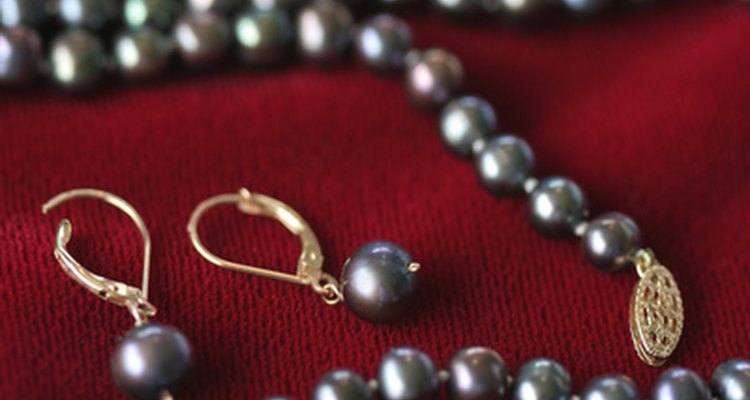
Pearls are stunning and often made into jewelry. The prices for pearls vary based on the quality, color, size and type of pearl, but harvesting pearls can be a very profitable business. The ideal harvesting is done at a pearl farm, where the pearls are guaranteed due to grafting, but harvesting can be done with wild oysters, muscles or clams as well. Wild pearls are often more valuable because they are often larger and higher in quality than the cultured pearls, which are allowed to form for a specific amount of time, but they are hard to find.
Wait until the winter months to start harvesting. According to Pearl Guide, winter harvesting is common because the oyster’s metabolism is slowed and the slowed nacre deposits will result in better luster on the pearl.
Pull the pearl oysters, clams or mussels out of the water. A pearl farm will usually require only pulling up a net that contains the animals. For capturing the wild creatures, the process will vary based on the location, size of the animal and supplies available, but the easiest option is to capture it in a net and pull it out of the water.
Slide the knife between the shells and gently pull the oyster, clam or mussel open. Some species of pearl producing animals are killed to extract the pearl while others are not. When dealing with the animals that are killed, the shell can be pulled apart until completely open; otherwise, it should only be opened enough to pull out the pearl.
Put a plug into the clam to keep it open. Like the grafting process, extracting the pearl without killing the oyster requires putting in a plug to hold the shell apart.
Cut the oyster and use tweezers to remove the pearl. Remove the plug and allow the oyster time to recover before grafting with the oyster again. Species that are killed can be pulled open and have the pearl cut free without as much gentle or careful work.
Related Articles
What Is the Range of the Cost of Pearls?

How to Change a Crown on a Rolex Watch

How to Cook Mussels & Clams Together

How Often Do Lobsters Shed Their ...
How to Identify Types of Pearls

How Rare Is a Black Pearl?
How Do Oysters Protect Themselves?
How to Remove Whelk Shells
The History of Biwa Pearls
How to Take Out a Bulova Watch Battery

Benefits of Lotus Stem
In What Parts of the World Are Valuable ...
How to Measure Pearls
How to Cook Fresh Oysters to Make Stew

How to Make Sago at Home

Are Farm Raised Mussels & Clams Healthy ...
What Is Golden Druzy?
How to Take Care of Pearl Rings
Types of Edible Clams

How to Identify Red Jasper
References
Writer Bio
Helen Jain has been writing online articles since December 2009 for various websites. She has studied English and psychology and hopes to get a Ph.D. in English in the future.
Photo Credits
black pearl earrings image by Roslen Mack from Fotolia.com