Acute Phase of Recovery
Step1
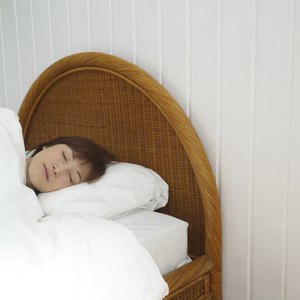
Rest in bed for up to 2 weeks. Be sure your mattress is firm. If it's not, place a bed board under your mattress.
Step2
Lying absolutely flat is not necessary unless it offers you the most relief from pain. You may want to elevate your legs and thighs somewhat to reduce tension in the back. Try putting a small pillow under your knees.
Step3
Avoid lying on your stomach.
Step4
Place a pillow between your knees whenever you are resting on your side.
Step5
Get out of bed by lying on your side and pushing yourself up into a sitting position.
Step6
Avoid constipation. Prolonged bed rest slows down intestinal function. Bowels get sluggish. Try a mild, bulk-producing laxative if you have difficulty moving your bowels. Eat plenty of fruits, vegetables and high-fiber foods while on bed rest - as much as 50-75% of your diet.
Step7
Straining to defecate should be avoided. Straining increases pressure on your spine and aggravates disk pain.
Step8
Ask your doctor for a prescription for muscle relaxants. Muscle spasms are common in the acute phase of herniated disk pain. Aspirin and ibuprofen aren't terribly effective during the acute phase.
Step9
Reduce muscular stress on your back by breathing deeply from your diaphragm.
Step10
Watch TV, listen to an audiocassette or ask someone to read a good book to you. This will help take your mind off your pain.
Step11
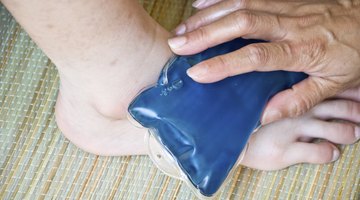
Apply hot or cold compresses. Generally speaking, heat works better than cold. Some patients find ice packs work better. Start out putting a heating pad set on low against your back.
The Recovery Phase Begins After the Acute Phase Passes
Step1
Get out of bed by lying on your side and pushing yourself up into a sitting position.
Step2
Wear a brace for extra spinal support.
Step3
Sit in a straight chair. Avoid overstuffed chairs or furniture, because it is difficult to stand back up after sitting in them.
Step4
Get up every 30 minutes from your chair for a stretch.
Step5
Keep feet flat on the floor when sitting.
Step6
Avoid quick, jerky motions.
Step7
Avoid constipation. Even though you are up out of bed, your bowels will continue to be sluggish until you are able to resume your normal activities. Take a gentle laxative every other day. Eat lots of high-fiber food. Enemas should be avoided because they can cause heart arrhythmia.
Step8
Ask your loved one for a gentle massage. Be careful not to rub too much over the ruptured disk. The massage is to relax your back and shoulder muscles and reduce stress on your spine.
Step9
Take aspirin or ibuprofen.
Step10
Avoid lifting anything except very light items, like your bath towel or your clean pajamas.
Step11
Take showers. They are easier than baths on your back muscles. If you love hot baths, you must have someone to help you get into and out of the bath.
Step12
Apply a heating pad or warm compresses to your lower back.
Step13
Practice simple stretching exercises as recommended by your doctor.
Step14
Take it easy for as long as you can. Give your back plenty of time to heal.
Comments
Anonymous said
on 8/8/2006 I have had great results with a Chinese Medicine doctor I am seeing. If you can you should get acupuncture at least 2 times a week until you are no longer acute. Chinese medicine is more than acupuncture. Make sure that the practitioner you go to talks to you about your diet, emotional state, and gives you some herbs to take. I have had excellent results from acupuncture, it also helped me get off narcotic pain medications. Being that this condition is built up over time, it makes sense to use this as an opportunity to reexamine how you live, and change what you need to change. Eat lots of steamed greens, black sesame seeds, eggs, duck, chicken, and yams. I found marijuana (in moderation) to be a great muscle relaxant, and far less dangerous and toxic than what my MD prescribed! Call on the people who you have helped to help you. Don't be shy. This will pass. Our bodies heal themselves, and you will heal in time.
Anonymous said
on 7/26/2006 Sitting on a firm surface, completely straight, is better than reclining and sitting on cushions. The more I focused on posture while sitting and standing, the better I felt. I would also recommend the McKenzie exercises.
Anonymous said
on 11/22/2005 If suffering prolonged pain from a ruptured disk, the core muscles and nerves around the injury can become impaired. Acupuncture has helped more than any other therapy (including drugs) to relive my pain and increase mobility and therefor speeding my recovery. If you have impinged, displaced nerves. keep taking NSAIDs for inflammation and linseed capsules to help repair. Be strong, and remember, it will get better.
Anonymous said
on 11/22/2005 Doing Bikram Yoga (24 poses in a certain order to warm up for the next) has helped my back more than anything. I've gone for 4 years without my chiropractor!
Anonymous said
on 11/22/2005 Tapping into your spirtual side brings about an inner peace that helps you through the pain. Also, a positive attitude that you are doing the best you can keeps you from being frustrated during this time period.