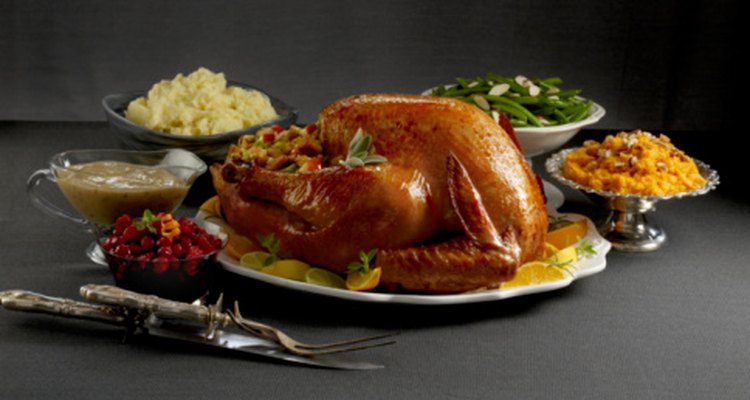
Thanksgiving offers a perfect opportunity to play christian games related to the holiday. Games offer diversion, competition and entertainment as delectable aromas waft from the kitchen. Gratitude is a central Christian value. Play games incorporating Scripture and emphasizing thankfulness. Add a game to test players’ quick thinking and to have a noisy good time. Mix up the games so guests don’t feel as if they are in school, but do not be afraid to challenge your hungry crowd.
Scripture Gratitude Game
The central theme of Thanksgiving is gratitude and the day’s central activity is Thanksgiving dinner. Play a Christian game before and during dinner. Give each person a numbered index card to fill out before dinner. Ask dinner guests to find a passage in the Gospels that symbolizes something for which each person is grateful. Collect the cards before dinner. Mix up the cards, giving each diner a card other than her own. Go around the table before the prayer asking each person to read his card. The reader has to guess whose card she has read. The person who entered the Gospel passage shares why the passage had meaning for her.
Noah’s Ark Creatures Game
Keep hungry guests thinking on their feet with a game, described on the website, EChristian Games, related to the biblical story of the Great Flood. (Genesis 6-9) Read the narrative, which includes God’s command to Noah to build an ark. Appoint a leader to choose players and call out “fish,” “bird” or “beast.” The chosen player must name such a creature that Noah might have gathered onto the ark. Players who cannot think of a name are out. The last person remaining wins. Give the winner a pocket New Testament.
Turkey Tail Feathers

Some games are fun even if not overtly religious. Play a child’s game involving all ages. Cut a turkey tail feather from a turkey cutout. Stick a piece of tape to the feather. Pin the de-feathered turkey picture to a door or a wall. Blindfold players who must tape the tail feather to the correct end of the turkey.
Related Articles

St. Patrick's Day Religious Activities

Outdoor Fun & Games for a Barbecue Party

Ideas for Junior High Sunday School ...
Faith Building Games for Children

Movie Party Game Ideas

Knight Party Game Ideas

Lingerie Bridal Shower Games

Spanish Bridal Shower Games

Children's Activities for Psalms 23

Youth Activities to Teach Humility

Bible Study Activities for Young Adults

Free Children's Bible Activities Grades ...
How to Play Baby Outburst Game for Baby ...
Family Devotional Games

Monopoly Theme Party Ideas

Christian Valentine Ideas

Outdoor Games to Play at a Picnic

How to Play a Trivia Game at a Birthday ...

Butterfly Birthday Party Games
Children's Activities on Moses, the ...
Resources
Writer Bio
Alyson Paige has a master's degree in canon law and began writing professionally in 1998. Her articles specialize in culture, business and home and garden, among many other topics.
Photo Credits
Visual Cuisines/Brand X Pictures/Getty Images