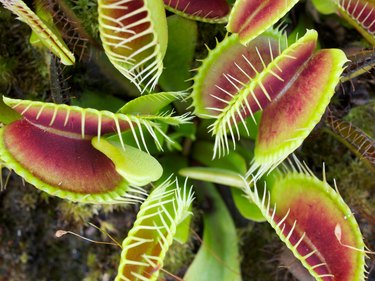
Venus flytrap (Dionaea muscipula, USDA zones 7-10) looks like it could be from another world, but this carnivorous plant is right at home on your windowsill or porch. Though it has a reputation for being difficult to care for, Venus flytraps just need a little bit of extra attention and the right environment to thrive.
Leave the Leaves Alone
Video of the Day
Your Venus flytrap plant looks like a tough alien creature, but it's a delicate plant that spends most of its energy catching and digesting food. If you poke your plant to activate it into closing its "mouth," it spends valuable energy and gets nothing in return. This will kill your plant. When real prey does land, it won't have the energy to snap and feed. Venus flytraps can take up to a week to eat before reopening. If you spot a closed mouth, don't force it open. It's in the middle of dinner!
Video of the Day
Water, Soil and Sunshine
Since Venus flytraps are native to the North Carolina and South Carolina wetlands, they prefer frequent watering and warm air. When growing your Venus flytrap, beware of the soil and water levels. Indoor plants will need to be watered. The soil should be damp but not drowning or in standing water. Distilled water or water without alkaline should be used to water your plant. Don't use potting soil or compost for your Venus flytrap. Peat moss is your plant's best friend. Sphagnum peat moss and horticultural sand mimic the plant's native acidic soil. Use peat moss alone or mixed with equal parts vermiculite. At least four hours of direct sunlight are needed to keep your plant happy.
Feeding Time
Although venus flytraps don't exclusively feed on flies and insects, they do live up to their name by consuming these creatures. This plant manufactures its own food by the process of photosynthesis, just as other green plants do. It simply supplements this nutrition by consuming flies and insects. While the plant can go one to two months without eating, indoor plants that aren't exposed to bugs will have to be fed every few weeks or so. Terrariums make this easy.
Place flies inside and seal the space shut for the plants to consume. Dead bugs can be fed to the plant, but you'll have to stimulate the small trigger hairs inside the "mouth" of the plant. A toothpick can be used to wiggle the dead insect inside the mouth or you can gently squeeze the plant after it shuts its mouth to press the trigger hairs against the bug. It sounds a bit morbid, but carnivorous indoor plants need the meal. Do not overfeed your plant or offer it bugs larger than its mouth.
Sleeping Season
In cold winter months, Venus flytraps go dormant. The mouth of the plant will tightly close and not open or try to catch food. This is the perfect time to snip off dead leaves. Cut darker leaves and flowers off so that they don't use as much energy. Don't be surprised if leaves fall off naturally – it's your plant's way of hibernating for the winter. Dormant plants don't need as much sun and should be moved from colder windowsills. Keep the plant's soil damp, and it will come back to life again in the spring.