
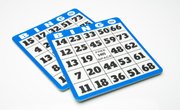
There are many ways to make learning fun and many good reasons for doing it. Kids are much more likely to become engaged in a lesson when the lesson doesn't seem like learning. This is especially important in a subject such as math, which does not always appeal to kids. If you are looking for a way to help your child brush up on his math skills, try bringing a little fun into the equation. Make a math board game and help your child to combine learning and fun.
- Cardboard
- Colored markers
- Yardstick
- Note cards
- Dice
- Playing pieces
Zero in on what your child needs to practice. The best way to do this is to meet with your child's math teacher. Find out what areas your child finds especially challenging so that you can be sure that the math board game focuses on the areas that will be most helpful to your child. Ask the math teacher for recommended resources such as books and websites that might be of special interest to you as you develop the game.
Make a long list of practice math problems and answers. Come up with as many math problems as you possibly can for this list. Every problem you include represents valuable practice for your child.
Dig all of your board games out from their storage spot in the basement. You need dice and game pieces for your math board game, and other infrequently used board games are a great source for such items.
Locate some cardboard that you can use to form the playing board for your math board game. You can use whatever you have on hand, as long as one side contains no writing.
Use a black marker and a yard stick to mark evenly spaced squares around the perimeter.
Use colored markers to assign a point value to each square on your math game board. For example, use red to denote spaces that are worth 10 points. Use yellow to denote spaces that are worth five points. Continue assigning points until all but three spaces have a point value. Use these three spaces to add a little fun to the board.. You can use them for a lose a turn space, a roll again space and a 10 free points space.
Things You'll Need
About the Author
Julie Elle's diverse writing portfolio includes product descriptions, marketing copy, newsletters, and web content for private clients on numerous topics such as home decorating, holidays and celebrations, and personal finance. Elle has been writing for Demand Studios since 2007. Elle holds a Bachelor of Arts in English from the University of Michigan.
Photo Credits
math image by jaddingt from Fotolia.com