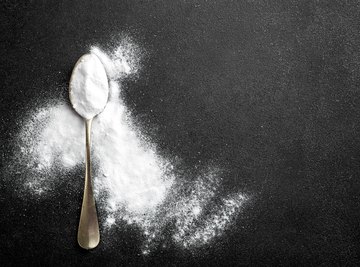

Carbon dioxide is a colorless, odorless gas. Each molecule of carbon dioxide is composed of one atom of carbon and two atoms of oxygen. It is easy to create using household chemicals, baking soda and vinegar, in an experiment that is common to many elementary schools. The acidic vinegar reacts with the basic baking soda to release water, sodium acetate, and carbon dioxide. From there, using simple steps, it is possible to use or harvest it in its gaseous form.
Carbon dioxide is heavier than air and does not support combustion. For these reasons, it is used in certain types of fire extinguishers. Carbon dioxide is also the gas that gives soft drinks their bubbles, and it can be frozen under pressure to create dry ice. It also finds use in greenhouses, inflating life rafts and life jackets, and in the meat industry, where operators employ it to calm animals before slaughter. Under normal atmospheric pressure, carbon dioxide does not exist as a liquid, and as a result, when dry ice melts it goes directly from solid to gas.
- Empty 2-liter soda bottle
- Funnel
- Vinegar
- Baking soda
- Candle
- Matches or lighter
Capture carbon dioxide in a balloon by stretching the neck of the balloon over the neck of the bottle.
Don’t add the baking soda to the bottle too quickly or the fizzing mixture could overflow out of the bottle.
Be careful with the candle and matches. Always have an adult present when experimenting with fire.
Pour about 1 inch of vinegar into your 2-liter soda bottle using a funnel.
Clean and dry your funnel.
Add 2 tablespoons of baking soda into the soda bottle slowly using your funnel. The baking soda and vinegar will fizz. The gas being given off is carbon dioxide. Keep adding the baking soda until there is no more fizzing. The carbon dioxide being given off is heavier than air. Thus, with the bottle upright, the gas will force the air out of the bottle, and the carbon dioxide will remain.
Light a candle.
Pour the carbon dioxide carefully from the soda bottle over the candle. Pour it just as though it were water or some other liquid. Because it is heavier than air, it will pour out of the bottle and over the flame of the candle and extinguish it. Be sure not to pour any of the vinegar or baking soda out of the bottle, just the gas.
Things You'll Need
Tips
Warnings
References
Tips
- Capture carbon dioxide in a balloon by stretching the neck of the balloon over the neck of the bottle.
Warnings
- Don’t add the baking soda to the bottle too quickly or the fizzing mixture could overflow out of the bottle.
- Be careful with the candle and matches. Always have an adult present when experimenting with fire.