How to Collect Carrot Seeds

How to Collect Carrot Seeds thumbnail
Produce your own carrot seed stock.

Collecting carrot seeds is fairly easy. Producing them takes a lot of work. Carrots will not seed until their second year of growth, so they must be dug and kept over the winter, then replanted in order to flower and produce seeds for collection. It's a 2-year effort, but can be accomplished by the intrepid gardener through careful cultivation and storage. Do not attempt to grow carrot seed if the original carrot is a hybrid variety, because hybrid seeds are not generally viable. Start from scratch with non-hybrid seeds if this is the case. Does this Spark an idea?

Things You'll Need

  • Carrot plants
  • Plastic tub, vented at bottom
  • Peat
  • Water
  • Gloves
  • Spade
  • Plant fertilizer
  • Watering can
Show More

Instructions

    • 1

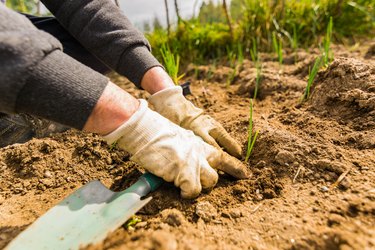
      Put on garden gloves and dig up existing carrots with a spade in the fall, before the killing frost. Dig around the carrot top to a depth of 6 inches, loosening the soil while being careful not to scratch the carrot root. Pull the carrots out gently to avoid breaking them.

    • 2

      Place carrot roots in a container that is ventilated at the bottom for drainage, stacking them in layers of peat. Keep cool and moist, but not wet, throughout the winter. Rotate the layers once a month to keep them uniformly moist.

    • 3

      Replant the carrots, in spring after danger of frost is past, in an area of the garden where they will have full sun and at least 2 square feet of space, because the flower stalk will grow quite large.

    • 4

      Water and fertilize with 1/2 tsp. of plant fertilizer mixed with a water can full of water once a month throughout the spring. Flower stalks will grow and bloom, and when the blooms fade, seedpods will form.

    • 5

      Keep an eye on the seedpods throughout the next month or so, and collect them when they become dry and brittle. Get them before they fall, to prevent birds and squirrels from plundering your harvest.

    • 6

      Take the pods indoors and leave them on a plate or saucer in open air to complete the drying process. Break open the pods and shake the seed into a vented plastic sandwich bag. Store in a cool, dry place for sowing the following spring.

Tips & Warnings

  • Don't try to produce seeds from grocery-store carrots. Most of them are hybrid varieties.

  • Don't store carrots in a basement near a furnace. Doing this will cause them to dry out, or sprout too early.

Related Searches:

References

Resources

  • Photo Credit carrot image by Andrzej Włodarczyk from Fotolia.com

Comments

You May Also Like

  • How to Save Carrot Seeds

    Saving the seeds from carrot plants takes a lot of patience, not because harvesting the seeds is a complicated process, but because...

  • How to Harvest Heirloom Carrot Seeds

    Growing heirloom carrots for seed is slightly more difficult than growing them for their root. Carrots will produce an edible root in...

  • How to Collect and Save Vegetable Seeds

    Certain vegetables, such as beans, peas, peppers and tomatoes, make saving vegetable seeds simple: These have self-pollinating flowers, meaning they pollinate ...

  • How to Start Carrot Seeds Indoors

    Carrots are an important source of nutrients in the human diet. According to the FDA, carrots are rich in beta carotene, vitamin...

  • How to Get Carrot Seeds From Carrots

    Carrot seeds are a great candidate for the seed-saving gardener. A two-year process will eventually produce a lovely, lacy flower that provides...

  • How to Start Carrot Seeds

    When starting carrot seeds, make sure the soil is deep, tilled well and rich in fertilizer. Plant carrot seeds in a raised...

  • How to Grow Carrot Seeds

    Growing your own vegetables can be an extremely rewarding experience. First, you get the satisfaction of eating your own vegetables, and you...

  • How to Plant English Peas & Carrots

    One is green, tiny and round, the other is orange, long and straight. Except that they are both vegetables, English peas and...

  • How to Harvest Carrot Seeds

    Saving carrot seeds, or any other vegetable seeds is a rewarding and cost effective activity. It also gives you the opportunity to...

  • How to Harvest and Store Carrots

    The carrots you see in the supermarket produce aisles have been bred to hold up in transit, often at the expense of...

  • How to Use Squash Seeds for the Next Growing Season

    Instead of purchasing squash seeds, you can use the seeds from squash in your garden to plant more produce the following year....

  • How to Grow Carrots in Containers

    Almost anyone can grow carrots! It doesn't matter if you live in an apartment or have super rocky soil, because these tasty...

  • How to Collect Pansy Seeds

    The velvety blossoms of the pansy plant are colorful additions to flower beds, borders and containers. You can pinch back or deadhead...

  • Seeds to Grow Vegetables

    Some varieties of vegetables, such as tomatoes, peppers and cucumbers, do better in a garden when they are transplanted as seedlings. You...

  • How to Make Your Own Carrot Seed Oil Eye Cream

    To make your own eye treatment cream, eliminate harsh chemicals by using natural, effective ingredients such as carrot essential oil. Carrot oil...

  • How to Plant Carrots Using Seed Tape

    Seed tape is a relatively new innovation that has simplified gardening and is especially helpful with tiny seeds such as carrots. Lay...

  • How to Germinate Carrot Seeds

    Carrots are grown for their edible roots. They are eaten both raw and cooked, and are an excellent source of vitamin A,...

  • How the Carrot Seed Grows Into a Carrot

    Carrots are a taproot vegetable, where the edible portion of the plant grows underground. Carrot seeds are very tiny seeds that undergo...

Related Ads

Featured