How to Fix a Flat Tire on Vehicles
by Contributing WriterUpdated June 12, 2017There is no grand trick to changing a tire on a Chevy Vehicles but because the Vehicles is large and heavy, it does take some effort -- and some precautions. Unlike some manufacturers, Vehicles posts free PDFs of owners manuals online, so information is readily available. Chevy says blowouts are rare on Vehicles so you so may be dealing with a slow leak. Regular checks of your air pressure will keep slow leaks from sneaking up on you and give you time to get the Vehicles to a dealer before you have to resort to the jack.
Under The Hood:
- How to Fix a Flat Tire on a Dirt Bike
- How to Fix a Flat Tire on a Suburban
- How to Fix a Flat Tire With Fire
How to Fix a Flat Tire on a Dirt Bike
Remove the axle lug bolt from the tire and remove the tire from the dirt bike. Set it on a rug or towel on the ground, sprocket down.
Use a crow bar to pry up a side of the tire away from the rim. Be careful not to scratch or dent the rim.
Pull the old, ruined tube out of the tire. Discard it, as it can not be used again. Dirt bike tubes are quite thin and weak, and once they develop a hole or crack, they can not be effectively repaired.
Slide the new tube into the tire and rotate it until its valve stem lines up with the hole in the rim. Make sure that the rim lining is still in place and in tact.
Use the crow bar once again to pry the side of the tire back onto the rim. Be very careful not to pinch the new tube.
Stand the tire up and pour soapy water down both sides just inside the rim. This will allow the tire to pop out onto its bead.
Inflate the tire to your desired hardness. Make sure that the tire pops onto its bead on both sides.
Items you will need
Replacement tube
Crow bar
Cup of soapy water
Air compressor
How to Fix a Flat Tire on a Suburban
Get on level ground. Never attempt to change a tire if the Suburban is not on level ground. If you cannot drive a short distance to level ground, call for help. If the Suburban rolls off of the jack while you're trying to change a tire, you can be severely injured or killed.
Secure the vehicle. Once you are on level ground, set the parking brake firmly and put the shift lever into the P (Park) position. If your Suburban has four-wheel drive, be sure the transfer case is in a drive gear, not in neutral. Turn the engine off and leave it off. Get passengers out of the vehicle. Put the wheel blocks at the front and rear of the tire opposite the tire you have to change. If you're changing the right rear tire, for example, put the blocks on both sides of the left front tire.
Get the tool kit from its storage area. You'll find the storage under the storage tray that sits, inside the vehicle, on the left rear wheelhouse. Lift the tray out by pulling on the finger depression under the jack symbol. The jack, tool kit and wheel blocks are held in place by two wingnuts and one knob. Remove them to access the tools. If any of the tools are missing, call for help.
Remove the spare tire from its storage compartment. First, open the hoist access cover, which is on the rear bumper, to the right of the license plate. Inside the access hole, insert the ignition key into the spare tire lock, turn it clockwise, then pull the lock straight out.
Next, connect the two jack handle extensions, then insert one into the matching hole in the handle of the wheel wrench, forming a T.
Then, insert the open end of the extension into the hoist access hole, and secure it snugly to the hoist shaft. Turn the wheel wrench counterclockwise to lower the spare tire all the way to the ground. Keep turning until there is some slack in the hoist cable.
Pull the spare tire toward you, then tilt it up toward the bumper so that you can reach under it.
At the end of the hoist cable is the tire retainer and a guide pin. Pull down on the guide pin, align the retainer with the cable, and thread the entire assembly through the center hole in the wheel. Set the spare tire near the tire you need to replace.
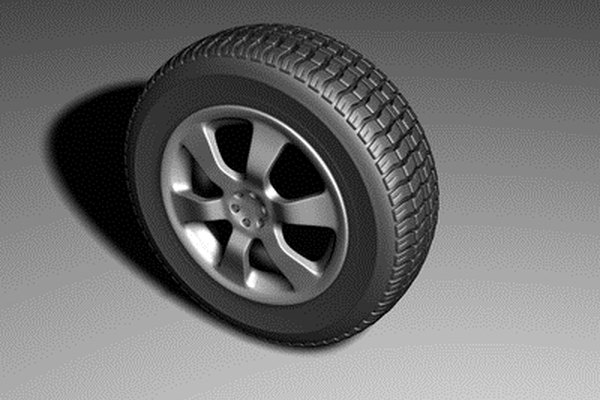
Loosen, but do not remove, the lug nuts on the wheel with the flat tire. If your vehicle has a cap that covers the lug nuts, use the chisel end of the wheel wrench to gently pry it off.
Position the jack on the frame behind the flat tire where the frame sections overlap. If a front tire is flat, you will only need one of the jack handle extensions. If a rear tire is flat, you'll need two. Once the jack is in position, turn the wheel wrench clockwise, raising the car just high enough to remove the flat tire.
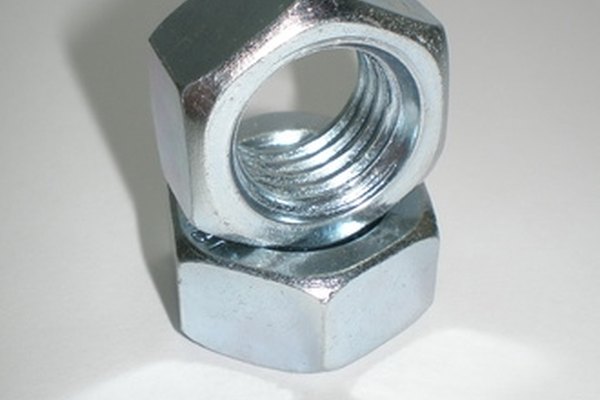
Remove the loosened lug nuts, then the flat tire. Clean debris and rust from the bolts, then place the spare tire on the hub. Tighten the lug nuts evenly, by hand. Loosely tighten one lug nut, then loosely tighten the one opposite it. Continue tightening lug nuts in a crisscross pattern until the wheel is held snugly to the hub. Tighten the nuts further with the wheel wrench. When all of the lug nuts are tightened, turn the wheel wrench counterclockwise to lower the car. When the spare tire is firmly on the ground, finish tightening the lug nuts.

Gather your tools and the flat tire, and store them in the car. Do not drive a long distance on a flat tire, and do not use four-wheel drive. As soon as possible, take the flat tire to a dealer or repair shop and have it patched or replaced.

Items you will need
Spare tire, properly inflated
Jack
Jack handle with extensions
Wheel wrench
Wheel blocks
How to Fix a Flat Tire With Fire
Raise the tire off the ground by using the jack to lift the vehicle. Follow the instructions for the type of jack you are using.
Spray the aerosol lubricant into the tire, where the tire is separated from the rim. Quickly spin the tire around several times to distribute the lubricant throughout the inside of the tire.
Use the lighter to carefully ignite the spray lubricant by placing the flame near the bead of the tire. The resulting explosive ignition should rapidly expand the tire and reseat the bead on the wheel. As the hot gas in the tire cools, the tire will deflate again, so proceed quickly to the next step.
Inflate the tire using the air pump so that the tire will remain seated properly on the wheel.
Items you will need
Car jack
Spray lubricant or other flammable aerosol
Lighter
Air pump


