
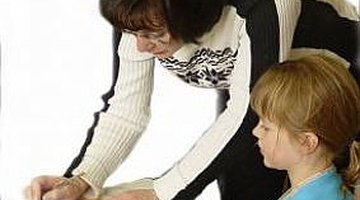

Would you like to be a teacher's aide for a student with autism? Sometimes a student with autism will have a teacher's aid whose primary function is to work with that student to help them be successful in a more mainstream setting. It is a rewarding positions to be in but it does take special knowledge.
If you are a teacher's aid for a student with autism, learn everything you can about autism spectrum disorders.
Most schools offer workshops. These could be at the school or they could be presented at other locations by other presenters. Ask about workshops. If there is a fee your school should be able to pay that for you. You should not have to pay for them. Go to as many on autism as you can. Read books. Temple Grandin has written books about her life with autism. Those are a great way to gain perspective. Talk to your school's case manager for the student and to the teacher to get information. Learn as much as you can before working with the student or at least as soon as possible. No two individual's with autism are exactly alike and so no information should slant your perspective, but kids with autism often think so differently and are impacted by things that we could not even imagine. You have to have knowledge of autism in order to work with them effectively.
Make sure that you have been shown a copy of that student's IEP.
The IEP should tell you what level they are on and what their academic and behavioral interventions should look like. Those things in the IEP are legally required components of their education and have to be done every time. If you do not know what they are and so cannot do them, the school is in violation of that child's educational rights. Therefore, having a copy is a must if you are working with the student.
The teacher will be giving the work and you will work under their guidance. Make sure that the student, with modifications, is participating with the rest of the classroom. They should not be doing something totally different than the rest of the class. That defeats the purpose in them being in a more mainstream setting.
Go out of your way not to stigmatize the student with autism.
One of the hardest things for students with autism is socialization. Kids start realizing by second grade or so who is different. Part of our job is to help that child fit in and succeed academically and socially both. Their IEP should even have some social goals and objectives on it. If the child is stigmatized as the kid who has to have someone right beside them, it could have a negative impact on their socialization. Go out of your way to appear to be the "classroom" aid while at the same time prioritizing their own needs and putting them first. One way to do this is, if you see the child with autism struggling with something, you could model that task to a group of students so that they are not singled out. Give a lot of praise and positive feedback to the whole class but sometimes to specific students, including them. These things help to make them feel more a part of the group instead of singled out as different from the rest of the group.
Model and explain but do not do the work for them.
There is a tendency to give so much help that the teacher or aide helping the student is feeding them answers. Do not do that! Give them the help so that they can actually do their own work. You can explain, model, guide, practice, and reteach.
Use communication that is effective for students with autism.
If the student with autism is non-verbal then they should have a communication system they are using. Know what that system is and use it. That system is for you to use with them and for you to help them to use with everyone else. They may be getting speech services. If so, speak to the speech person about recommendations or get those from the classroom teacher.
If the student with autism is verbal, their verbal skills may still be limited in scope or quality.They often need information broken down into smaller steps. They have a hard time understanding the more subtle aspects of communication, such as non-literal language. Part of your job may be to help reword the teachers information. Use concrete, literal langauge, avoid any slang or implied meanings, use as few words as possible, use good non-verbal language (such as pointing to what you are talking about, etc.) and break information down into smaller steps. Do not always wait for them to ask for help. They may not know what they need help with or may just not advocate for themself (this is an area of difficulty for kid with autism). If you see them struggling, go to them.
Give them support and help with any modifications but limit the help to just what they need to work independently.
It is very easy for kids with autism to become overly dependent on someone else. We want to teach them independence. This has to incorporated into how you work with them. Be careful not to help them to quickly. You definitely do not want them to be frustrated, but give them a chance to try things and take a little time before helping them. I have seen many times where the student was working completely on their own but could not do anything unless the aide or teacher was sitting right beside them. They just wanted that physical presence. Avoid this. Gradually create a physical distance so that they can be independent. Be close enough to keep an eye on them but more around the room occasionally, stand near a whole group of children, etc. Do not let them become helpless without an adult one foot away.
Related Articles








Writer Bio
This article was written by the CareerTrend team, copy edited and fact checked through a multi-point auditing system, in efforts to ensure our readers only receive the best information. To submit your questions or ideas, or to simply learn more about CareerTrend, contact us [here](http://careertrend.com/about-us).