How to Kill Yellow Jackets in a Flower Bed

How to Kill Yellow Jackets in a Flower Bed thumbnail
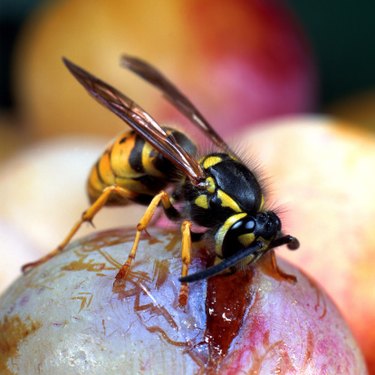
Yellowjackets have a distinctive black and yellow coloration.

Yellow jackets are common garden pests that are made more of a nuisance due to their stingers. Yellow jackets may build nests in a variety of locations, including under porches and roofs, in the siding of buildings or inside homes, garages and sheds. Yellow jackets that are nesting near or in a flower bed have likely built their nests in shrubbery, underground in former rodent burrows or in nearby trees. Because not all yellow jacket nests are built aboveground, controlling them can sometimes be difficult. Does this Spark an idea?

Things You'll Need

  • Thick gloves
  • Long-sleeved shirt
  • Long pants
  • Protective eyewear
  • Hat
  • Bee veil
  • Flashlight
  • Red cellophane
  • Insecticidal dust
  • Shovel
  • Moist soil
  • Freeze-type insecticide spray
Show More

Instructions

  1. Underground Nests

    • 1

      Determine the entry point to the nest by observing yellow jackets during the day when they are active. Yellow jackets will return to the entrance of their nest several times during the day.

    • 2

      Wait until after dark to attempt to destroy an underground nest, as this is when the yellow jackets are inactive inside the nest. The Ohio State University Extension suggests waiting until 9:30 p.m. to begin the process.

    • 3

      Dress in protective clothing. Thick gloves, a long-sleeved shirt, long pants, goggles or other protective eyewear, a hat that covers the ears and a bee veil will protect you from potential stings.

    • 4

      Locate the entrance of the underground yellow jacket nest. If using a flashlight, cover it with red cellophane to prevent disturbing the yellow jackets with light.

    • 5

      Pour or puff--depending on the directions on the label--an insecticidal dust labeled for use with yellow jackets into the nest entrance.

    • 6

      Shovel a pile of moist soil over the entrance to the nest, and pack it down firmly.

    Aboveground Nests

    • 7

      Determine the location of the hanging or aboveground yellow jacket nest by observing the behavior of yellow jackets in or near your flower bed. Aboveground yellow jacket nests are generally easier to spot than the entrances to underground nests.

    • 8

      Wait until late evening to begin applying insecticides, as this is when most of the yellow jackets will be in the nest, according to the University of Minnesota Extension.

    • 9

      Dress in protective clothing as described in the Underground Nests section.

    • 10

      Spray a freeze-type, long-range insecticide spray on the nest in a sweeping motion according to the labeled directions. Long-range sprays allow you to stand between 15 and 20 feet away from the nest, limiting your exposure to the yellow jackets. Eliminate all yellow jackets guarding the nest.

    • 11

      Spray the insecticide directly into the entrance hole, located on the bottom of the yellow jacket nest.

    • 12

      Observe the nest carefully for the next one or two days. If no activity is present, you can remove the yellow jacket nest.

Tips & Warnings

  • The safest and most effective option when faced with an infestation of yellow jackets is to allow a professional pest-control specialist to remove the insects.

  • If a yellow jacket lands on you, refrain from swatting at it or making sudden movements, as this may incite it to sting; instead remain calm and move slowly.

  • Yellow jackets are attracted to sugar, so hang any hummingbird feeders away from your flower bed.

  • Wear protective clothing and be extremely cautious at all times when dealing with yellow jackets.

  • Always follow the labeled directions on any insecticide, and avoid using insecticides in areas where it may come into contact with children or pets.

  • Seek medical attention immediately if you being to show any signs of an allergic reaction to yellow jacket stings.

Related Searches:

References

  • Photo Credit hornet image by Dwight Davis from Fotolia.com

Comments

You May Also Like

Related Ads

Featured