


When you create a photography portfolio for college, your goal is either to get into an arts college or a photography course or display the skills you've gained from a course. Although your acceptance or final grade might not depend solely on your portfolio, it doesn't hurt to showcase your work as attractively as possible. That means defining a theme for your portfolio and choosing images that show your skill and your individual vision as an artist.
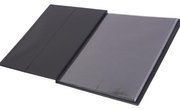
Buy a high-quality portfolio. Select a hardback portfolio book with a cloth, vinyl or metal cover. It doesn't have to be exceptionally durable because you'll be handing it to one or two professors rather than dozens of potential clients. Choose a size based on the size of your photos. For most photographers, 11 x 14 inches will suffice.
Choose a theme by defining the unique aspect of your work. Decide what gives your photography its individual flair. Consider your passion and the artistic goals you want to reach after college. What kinds of images would you love to create for a living? Use these ideas to develop a theme for your portfolio. For instance, if your specialty is portraits of kids that express each child's silly side, you can use the themes of children and humor.
Sort through your current collection of work. Get out at least 100 photos you've taken in the last two years. Set aside those that relate to your theme. From those, select 15 to 30 images you consider your best. These images should demonstrate your range of technical skills and showcase your unique vision. Leave out potentially controversial images that involve nudity, violence or religion.
Take more photos to fill in the gaps. Some colleges and photography courses require specific types of photos, such as available light photography, portraits or commercial product photos. If you don't have any truly high-quality photos of required subjects, it's worth taking some. Likewise, if you want to highlight a particular skill you have, but none of your current work does your ability justice, take some photos that do. Add these to the photos you've already selected, but keep no more than 30 photos total.
Prepare your photos. Check if the college requires a certain format for the portfolio. If not, it's your choice whether to use prints, transparencies or even tear sheets. Mat your prints to create a finished look. Mats in portfolios are usually all the same size to produce a sense of unity, but a variety is also acceptable.
Arrange the photos in your portfolio to show your skills as as well as your artistic and professional goals. Start with one of your most striking and memorable photos. This image should clearly express your goals. For example, if you want to specialize in macro work, lead with an impressive macro shot. Arrange subsequent photographs in a logical order. If you want to be an architectural photographer, you might start with images of old buildings and end with newer ones.
Tip
Check the college's or course's requirements before you start creating your photography portfolio for college. They might have requirements for subject matter, number and format of the photos. If you're applying to a distant college, check whether you can submit a digital portfolio on a CD. Make your portfolio as professional as you can. College professors and administration can be wary of accepting students they suspect might not take their studies seriously. Find an expert photographer to critique your portfolio. A professional can catch mistakes a student might overlook.
Warning
Never leave your only copies with anyone. Always make duplicates of the images in your portfolio before you entrust the portfolio to anyone.
Related Articles






References
Tips
- Check the college's or course's requirements before you start creating your photography portfolio for college. They might have requirements for subject matter, number and format of the photos. If you're applying to a distant college, check whether you can submit a digital portfolio on a CD. Make your portfolio as professional as you can. College professors and administration can be wary of accepting students they suspect might not take their studies seriously. Find an expert photographer to critique your portfolio. A professional can catch mistakes a student might overlook.
Warnings
- Never leave your only copies with anyone. Always make duplicates of the images in your portfolio before you entrust the portfolio to anyone.
Writer Bio
Nicole Langton has been a professional writer for over 10 years. She began writing for a natural health company where she developed a deep interest in nutrition and natural treatments. Langton earned a Bachelor of Arts in east central European studies as well as a certificate in English language to teach to adults.