
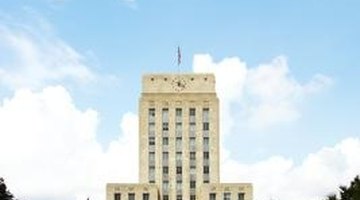


The countries of the world are organized in very different ways with regard to their leadership. Students in the sixth grade can begin learning about their own type of government and how it compares to the alternative types found in other places. They need to learn about the important differences between the representative forms of government and also about the nonrepresentative types.
Democracy
A democracy invites all citizens of the country to vote for political leadership. All democracies are based on rule of the majority population; protections for minorities are not automatic with this type of government. The most typical form of democracy is a representative democracy, in which the people vote for politicians to represent their interests in the government. Sometimes the people are asked to vote on specific issues in a democracy. This would be called a direct democracy. Ancient Greek city-states and New England townships were examples of direct democracies. Voters in direct democracies would assemble and debate the political issues and then vote on them with the majority winning.
Dictatorship
A dictatorship is led by a single individual who was most likely never elected by the people, although some dictators have won popular elections and then abused their powers once in political office. Dictators use force to maintain control of the people. When the military is in charge of a country it is called a military dictatorship, but this does not usually last for a long period of time.
Republic
A republic is different from the majority-rule of a democracy; it exists to protect the rights of individuals. Republics are representative governments that are limited by a constitution in their powers over citizens. The constitution is a document the citizens can change in a republic, but only through a rigorous amendment process. The United States is an example of a republic, ruled by a government limited by its written constitution.
Monarchy
A monarchy is a government ruled by a king or queen. The royal leader can have absolute power over the people or be bound to the rules of a constitution in what is called a constitutional monarchy. There are different ways to choose the royal leaders, whether it is strictly hereditary or based on some kind of election. The election is not always democratic, however. The Holy Roman Empire, for example, elected its emperor through the vote of a handful of nobles called prince-electors, all of whom were part of the ruling Hapsburg family.
Anarchism
Anarchy is the absence of government. Anarchists believe that people can organize themselves and live peacefully without the threat of government force. This is a broad category of government with many different manifestations. One manifestation is social anarchism, which promotes a totally free association between people in every relationship, including both the political and the economic worlds.
Related Articles




References
Writer Bio
Brian Gabriel has been a writer and blogger since 2009, contributing to various online publications. He earned his Bachelor of Arts in history from Whitworth University.