Tip
Rooted aquatic plants and algae add dissolved oxygen to water under adequate lighting conditions, however with poor lighting, plants will respire and decrease dissolved oxygen. In ponds, these plants cause diurnal dissolved oxygen variation with oxygen levels decreasing at night. Also, dead plant material along with animal waste contribute to lower dissolved oxygen by promoting growth of oxygen-using bacteria.
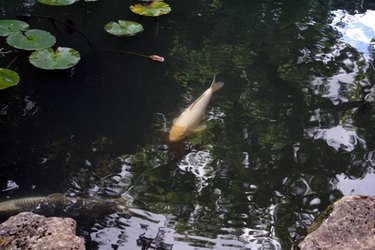
The gas form of oxygen dissolves in water and can reach a maximum level called the oxygen saturation point. Temperature, salinity and pressure determine oxygen saturation point.
Low dissolved oxygen levels may be dangerous for aquatic life such as fish. Oxygen enters water through diffusion from air, wind and wave action and plant photosynthesis. Dissolved oxygen levels are increased by supplementing wind and wave action, adding plants to water and exposing water to purified oxygen. Using the latter method can result in supersaturation, or levels of oxygen in excess of natural levels.
Video of the Day
Video of the Day
Step 1
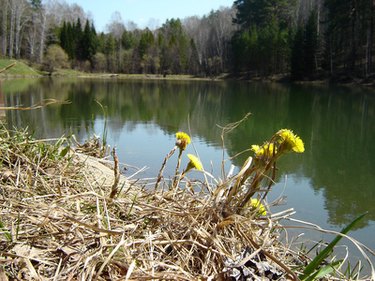
Run a portable splash or spray type aerator in water. IFAS recommends portable tractor or motor-driven pumps or paddle wheels for emergency aeration of ponds. Use when tests indicate low dissolved oxygen levels or if fish display signs of oxygen deprivation. These machines cause a rapid increase in dissolved oxygen and are useful in 3- to 20-acre ponds.
Step 2
Install and run a fixed diffuser system, airlift pump, slow-moving paddle-wheel and fan to a pond, as recommended by IFAS. These fixed systems agitate and mix water on a schedule and result in more constant dissolved oxygen levels through wind and wave action and mixing of lower, less oxygenated water and upper water levels. Fish can use a greater portion of pond water because localized areas of oxygen depletion are reduced.
Step 3
Install and run an air pump attached to an air stone, for an aquarium. These devices cause surface water turbulence, increasing gas exchange between air and water. Like fixed pond aerators, they provide evenly distributed dissolved oxygen levels by mixing water. Aquarium filters often agitate water and contribute to water oxygenation as well.
Step 4
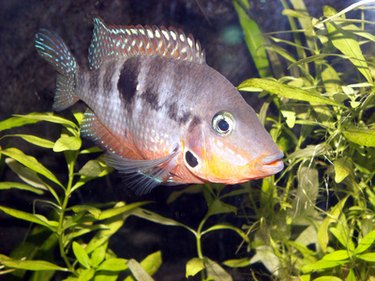
Promote photosynthesis by adding rooted aquatic plants to water. Plants photosynthesize under adequate lighting conditions, adding dissolved oxygen to water.
Step 5
Expose water to pure oxygen gas in a closed container or by bubbling oxygen through water. Avoid supersaturation, which may lead to fish death. Use this method when transporting fish.