

My Air Conditioner Blower Stopped Working After a Power Outage

Power outages are common during the summer months when power grids are strained with the demands of air conditioning in many homes and businesses, among other power demands. While most power outages are no big deal, home appliances occasionally do not restore power as expected when the power outage is over.
There are a few reasons why an air conditioner blower may stop working after a power outage and a few ways to troubleshoot the problem.
Fuse or Circuit Breaker
If the air conditioner is not working or blowing cold air after a power outage, check the household fuse or circuit breaker and replace or reset as necessary. Sometimes the fuse or circuit breaker trips as a result of the power outage and must be resolved before the power can be restored to individual appliances.
Power Switch
While it may seem obvious, once it has been determined that the fuse or circuit breaker is not the problem or has been fixed, check the air conditioner power switch. Turn the power off and then back on to reset the machine. If the unit does not turn back on, turn it off, wait 30 minutes and then turn it back on.
Power Circuit
Another consideration if the air conditioner blower is still not working after a power outage is if other appliances on the same power circuit are working. Consider removing other appliances from the power outlet and moving them to another power supply so that the air conditioner is the only appliance on the circuit.
Thermostat
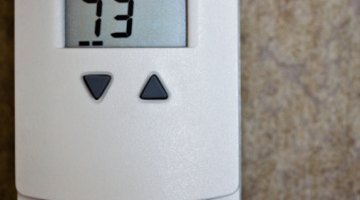
If all the other elements seem to be working but the air conditioner is not functioning, check the thermostat, which may have reset after the power outage. Set the system switch to “On” and set the temperature to a point lower than the current air temperature. Set the fan or blower switch to “Auto” or “On.”
The Drip Cap
- Power outages are common during the summer months when power grids are strained with the demands of air conditioning in many homes and businesses, among other power demands.
- Another consideration if the air conditioner blower is still not working after a power outage is if other appliances on the same power circuit are working.
- Set the system switch to “On” and set the temperature to a point lower than the current air temperature.
Writer Bio
Meredith Jameson writes early childhood parenting and family health articles for various online publications. She holds a Bachelor of Arts in history from San Francisco State University.
Photo Credits
- Jupiterimages/Photos.com/Getty Images
- Jupiterimages/Photos.com/Getty Images
More Articles

