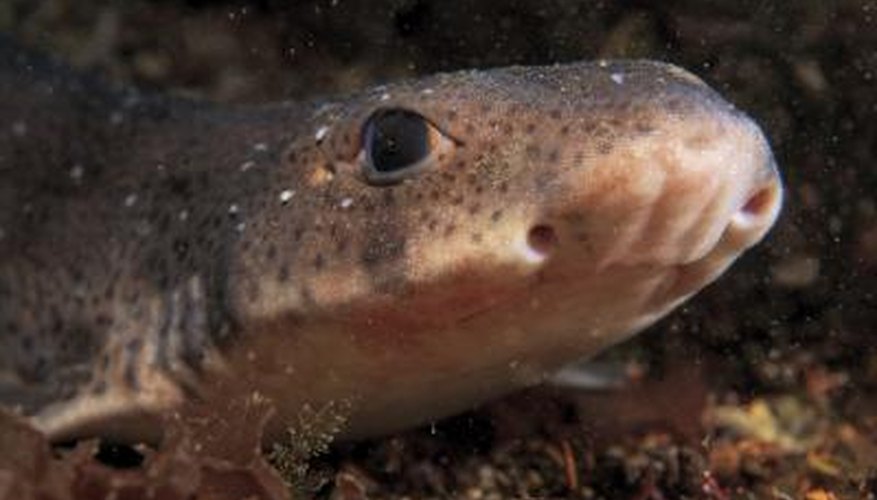


Dogfish, also known as spiny dogfish or smooth dogfish, are common to most large bodies of saltwater -- especially the Atlantic Ocean, Pacific Ocean, Black Sea and Mediterranean Sea. Dogfish are part of the shark family and noteworthy for having two dorsal fins, including a smaller fin located between the main dorsal fin and the tail. Spiny dogfish are typically found in deep, cold water, while smooth dogfish are usually caught in shallow water close to shore. Dogfish are known to be scavengers as well as prolific bait stealers.
Items you will need
Spinning rod and reel
Monofilament or braided fishing line
Fishing hooks
Lead sinkers
Live or cut bait
Step 1
Set up light tackle. Use a light rod -- around 5 to 7 feet in length -- with a spinning reel attached. Fill the reel with light test, such as 10- to 12-pound test monofilament or braided fishing line.
Step 2
Use a small- or medium-sized claw hook with a pyramid sinker tied about 5 feet above the hook.
Step 3
Use just about any kind of live, dead or cut bait to catch dogfish, as they are known to bite on almost anything. Good baits include small bonefish, squid, bunker chunks and mullet.
Step 4
Anchor your boat in fairly deep water, at least 30 feet, for catching spiny dogfish. You can also catch them while drifting as well. Allow the sinker to take the bait all the way to the bottom of the sea floor. Jig the bait from time to time, if anchored.
Step 5
Cast your line about 10 to 15 feet from shore, if fishing in the surf or from a pier. Allow the motion of the waves to jig the line for you. Reel in and check your bait occasionally and replace, if necessary.
Step 6
Set the hook once you feel a strike. Allow the dogfish to run for a couple of seconds before starting to reel it in. Keep the line away from structures -- if fishing from a shore or pier -- or away from your boat, if on the water.
References
Writer Bio
Based in Virginia Beach, Mark S. Baker has been working in editorial for more than 20 years. He has served as a writer and editor for publications such as the "Houston Post," "Boca Raton News" and "Interactive Week," among others. Baker also has a culinary arts degree from Johnson & Wales University and has his own catering business.