

How to Convert a Ceiling Fan to Solar Power

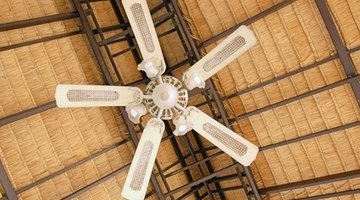
If you want to convert your ceiling fan to solar power, you need to determine the ceiling fan's power consumption. According to Progress Energy, an average ceiling fan consumes about 80 watts per hour. Once you figure out the hourly consumption, multiply it by the number of hours you get sunlight each day (for example, 14 hours). This will determine the total power required for generating solar energy in a day (80 x 14 = 1,120 watts).
-
Shop around for the right-sized solar panel for your ceiling fan. Solar panels of different sizes offer varying watts of power per hour, ranging from 10 watts to 200 watts. When you go to the solar equipment store, ask the salesperson to show you the panels that will be appropriate for your energy needs. Also purchase the solar panel mounts and rails, which are necessary for installation.
-
Locate an area for mounting your solar panels that receives ample sunlight during the day. Typically, they are installed on rooftops.
-
Draw straight lines to mark the exact position where the panel mounts are to be installed on the chosen spot. Use chalk for this purpose.
-
Find the supporting rafters of the roof using a stud finder. Align the panel mounts on top of these rafters.
-
Predrill the mounting holes using an electric drill with a pilot bit. This will prevent the rafters from splintering. Using lag bolts, drill and secure the panel mounts to the top of the rafters. Place metal flashing over the mounts, which will prevent potential leakage in the roof.
-
secure metal rails over the mounts using 3/8-inch stainless steel bolts.
-
Fasten the solar panels alongside these rails. Open the junction box on the back of each solar panel and connect the panels together until you reach the last panel.
-
Run the wires from the last solar panel to another junction box. Then run a conduit from the panels to the inverter inside your home that provides electricity to the ceiling fan. Close the opened junction boxes.
References
Resources
Writer Bio
Joanne Cichetti has written articles and Web content professionally since 2009, focusing primarily on health and lifestyle. In order to further pursue her writing career professionally, Cichetti inducted herself in the Long Ridge Writers Group, and she looks forward to having a novel published under their guidance.
Photo Credits
- ceiling fan image by Adrian Hillman from Fotolia.com
More Articles

