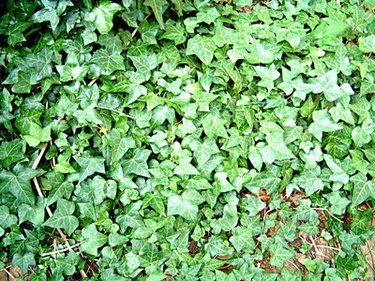
Growing English ivy as ground cover offers a quick way to green up a large area, including shady areas where other plants don't grow well. English ivy (Hedera helix) is a self-clinging vine that's easy to grow with little care. This woody evergreen ground cover is hardy in U.S. Department of Agriculture plant hardiness zones 4 to 11. It displays attractive dark-green, waxy leaves, often with a three-lobed structure. As ground cover, English ivy only grows a few inches tall, but it can spread quickly.
Consider Invasiveness First
Video of the Day
English ivy is considered an invasive plant in many areas because it takes over areas so well. When grown as a climbing vine, it can scale a structure 50 to 100 feet high, and it can spread the same distance over the ground when used as ground cover. Check with local university extension services or local gardening experts to find out if English ivy is a good ground cover choice for your area.
Video of the Day
Where to Grow English Ivy
Choose a spot where you want fast-growing ground cover. English ivy can grow in anything from full sun to full shade, making it ideal for semishady and shady areas with limited options. You can use it to cover garden walls, fences or other structures in the area. It can also be used in hanging baskets for a trailing accent or can be grown as a houseplant if it's considered invasive in your area.
Provide Ideal Growing Conditions
English ivy can grow in a variety of soil types as long as it drains well, but rich loams are ideal. You can amend the soil to make it well draining. English ivy plants prefer medium moisture levels in the soil, but they can tolerate some drought conditions. Even soil moisture helps the foliage growth and color.
When planting English ivy, leave about 1 to 2 feet between the plants. The ideal planting time is either in the spring or fall. For the first year while the ivy spreads and becomes established, it might need irrigation during dry periods. Mulching the area can also help control weeds that try to compete with the ivy.
Shelter the English Ivy
Even though English ivy usually grows vigorously, it benefits from some protection from extreme weather. Protection from cold winter winds can help the evergreen ground cover survive the winter months in colder areas. Shielding it from extreme summer temperatures and lots of direct sunlight can also keep your ground cover growing well.
Control English Ivy Growth
English ivy continues spreading, not only across the ground but also on any type of structure, including houses and trees. Part of growing English ivy as ground cover is controlling it with regular pruning when it starts to vine up those structures. You might need to remove ivy from siding to protect it, depending on the material.
English ivy ground cover can be damaging to trees and other plant life. The ivy will eventually cover the tree and can smother the leaves, which interrupts photosynthesis, a process necessary for the tree to survive. To get rid of the English ivy, cut the vines with pruning shears at the base of the tree and remove as many of the vines from the tree as possible. The higher vines that you can't reach will die and fall out of the tree.