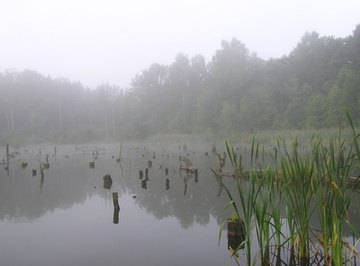
Ponds and lakes, streams and rivers, wetlands and estuaries and the plants and animals that live within them make up freshwater biomes. Human activities are significantly impacting and endangering freshwater biomes, which comprise one-fifth of the earth’s surface. Freshwater biomes are declining worldwide.
Freshwater Biomes
Unlike the ocean, which has a salt content of about 35 parts per thousand, fresh water biomes are composed of less than 1 percent salt concentration. Fresh water mingles with salt water in estuaries and they support many plant and animal species. Plants and animals that live in freshwater biomes are acclimated and often unique to their environment. Fresh water biomes provide water for agriculture and most of the drinking water for human populations.
Fish Decline
About 40 percent of the fish species in the world live in fresh water biomes, and in the past 20 years, freshwater fish populations have declined by over 20 percent. Humans have destroyed habitat for freshwater plants and animals and polluted watersheds. They have filled in crucial wetlands like marshes, swamps and bogs for development.
Habitats Destroyed
People withdrawing water from freshwater biomes cause them to shrink and degrade plant and animal habitats. Building dams and water diversion systems block fish migration routes and destroy irreplaceable plants and animals.
Pollution
Runoff from agricultural and urban areas affects the water quality of freshwater biomes, and overuse and pollution threaten the groundwater supply.
Balance of Nature
Global warming caused by humans may produce devastating floods and droughts. Humans disrupting the balance of nature in freshwater biomes can permit the invasion of exotic species that can harm native animals and plants.
Preserving Freshwater Biomes
People can help preserve freshwater biomes by curtailing dam construction, reducing the use of pesticides and other water and plant pollutants and establishing protected wetlands areas.