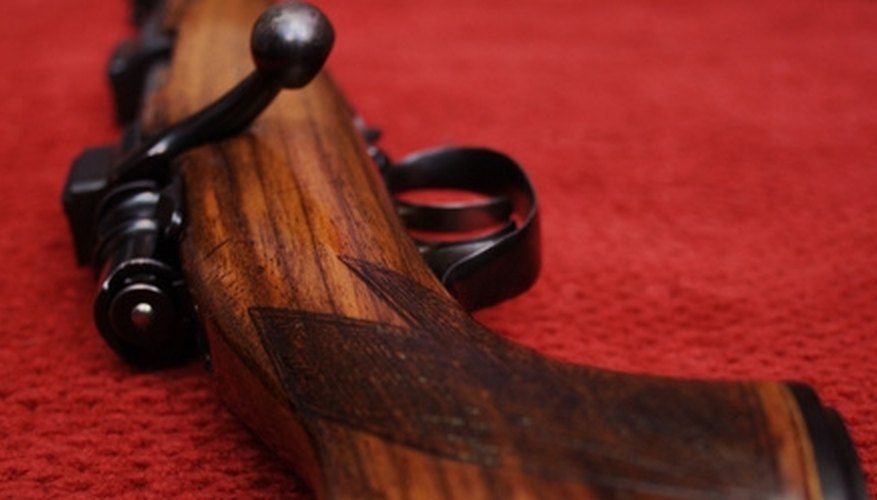


A rifle's original finish can become compromised from wear, weather, accident or abuse. A popular method for refinishing a rifle stock is by hand-rubbing it with boiled linseed oil. Linseed oil is sold "raw" in its pure form, and it's added to oil-based paints. Boiled linseed oil is more often used on bare wood and is popular for finishing gun stocks, as the process of heating it decreases its drying time. When hand rubbed into wood, it creates a durable weatherproof seal and the heat produced from the friction of rubbing produces a deep, polished finish. Before refinishing a rifle stock with boiled linseed oil, the old finish must be thoroughly removed.
Items you will need
Flathead and Phillips screwdrivers
Spray-on finish remover
Rubber gloves
Fine grit sandpaper
Masking tape
Sandpaper block
Fine steel wool
Soft cloth
Boiled linseed oil
Remove the action, recoil pad, butt plate and sling swivels from the stock with the screwdrivers.
Slip on the rubber gloves and coat the stock with the finish remover. Allow to stand according to the manufacturer's direction and then wipe clean with the cloth.
Fold a piece of sandpaper and use the folded edge to remove the finish from the checkering by gently working into the grooves and across the ridges. When the old finish has been removed, cover the checkering with masking tape to prevent it from being accidentally hit with the sandpaper while sanding the surrounding areas.
Insert a piece of sandpaper in the sanding block and gently sand the stock, working with the grain. When all the old finish has been removed, go over the stock with the steel wool and wipe clean with the cloth.
Apply a few drops of the linseed oil on your fingers and rub it into the wood until it is completely absorbed. Cover the entire stock with three to four coats, allowing each coat to dry overnight.
Remove the masking tape and apply one coat of oil to the checkering, working it into the grooves with the cloth.
Warnings
- Do not apply more than two coats of oil to the checkering, or you risk the grooves becoming clogged.
References
- "Jim Carmichel's Book of the Rifle": Jim Carmichel: 1986
Warnings
- Do not apply more than two coats of oil to the checkering, or you risk the grooves becoming clogged.