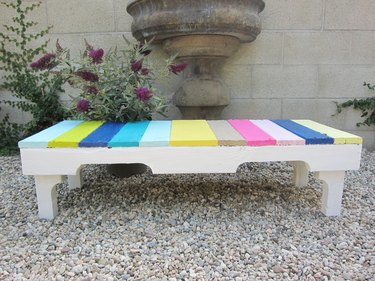
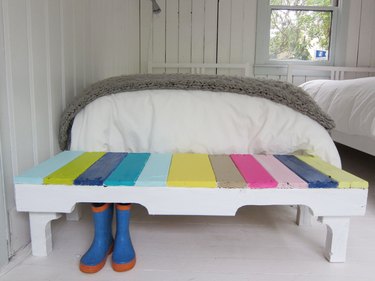
Overlooked, underutilized and habitually undervalued, simple wooden pallets are an absolute goldmine for the enterprising crafter looking to make something out of nothing. With a bit of handiwork, you can turn an average pallet into an eye-catching bench that's as inviting to the eye as it is comfortable for sitting.
Video of the Day
Things You'll Need
Pallet
Crowbar
Hammer
Chop saw
Drill with countersink bit and Phillips head attachments
2 1/2-inch screws
1 1/4-inch screws
Measuring tape
T-square
Utility knife
Sandpaper, medium grit
Paint primer, 1 quart
Acrylic paint, various colors
Paintbrushes, various sizes
Plastic squeegee or scraper (an old credit card will work too)
Tip
Not every pallet is a good candidate for usage. If it is labeled HT, it means that it was heat-treated and safe to use. If the pallet is labeled MB, it has been treated with methyl bromide and is potentially toxic. So let's skip the latter and go with the former.
Step 1:
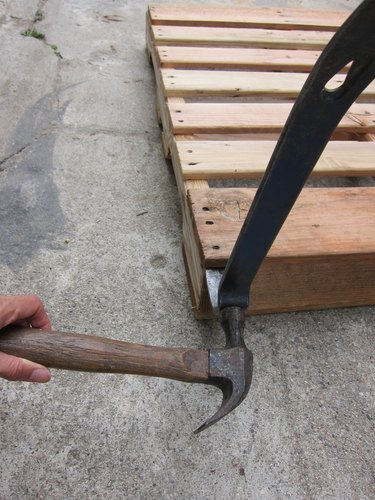
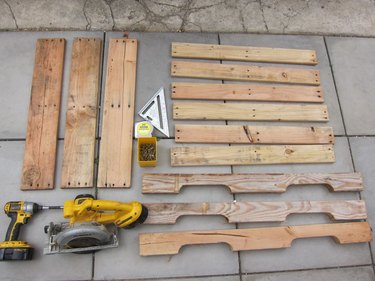
Pry the pallet apart with a hammer and crowbar, starting at the bottom of the pallet. Some of the boards may split. The bottom boards will not be needed, so it is OK if these split. Remove the loose nails as you work.
Video of the Day
Step 2:
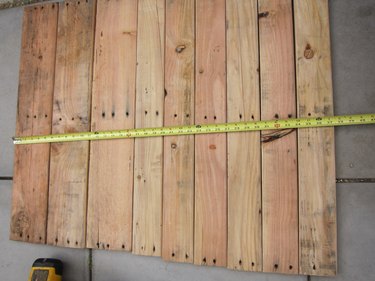
Lay out all the top boards from the pallet (one-by-fours) to figure out how many you need to span the length of one pallet support (the scalloped two-by-fours). On this pallet, the pallet supports were 40 inches long.
Step 3:
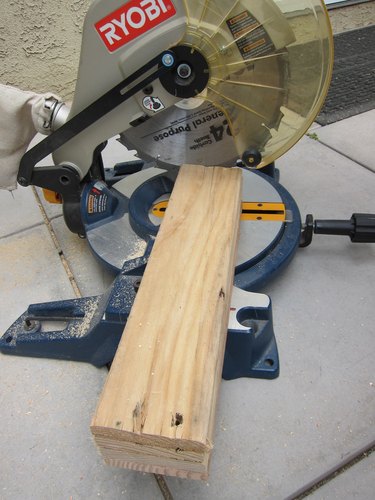
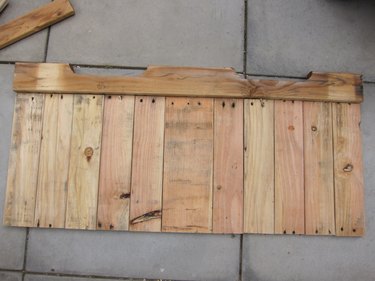
Use the chop saw to cut all of the top one-by-four boards in half to create enough pieces for the top of the bench. For example, in this project the top boards started off as six 30-inch long pieces and were chopped down to make 12 pieces that were 15 inches long. Of these 12 pieces, 10 of them were used for the bench top and two were used for the side skirts. Also, to fill in the gap for the bench top, one of the one-by-sixes (also from the top of the pallet) was cut down to 15 inches long and stuck in the middle of the one-by-fours as shown.
Step 4:
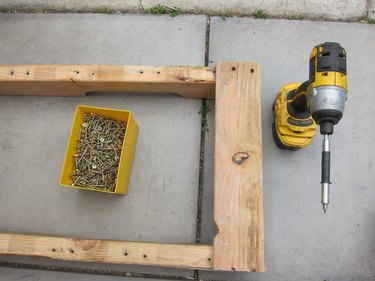
Lay two of the pallet supports (scalloped two-by-fours) parallel to each other with the notched sides down and the flat side up. Connect the two pieces together at one end by drilling one of the top one-by-four boards into the pallet supports. Use two screws on each side of the board. Repeat on the other end.
Tip
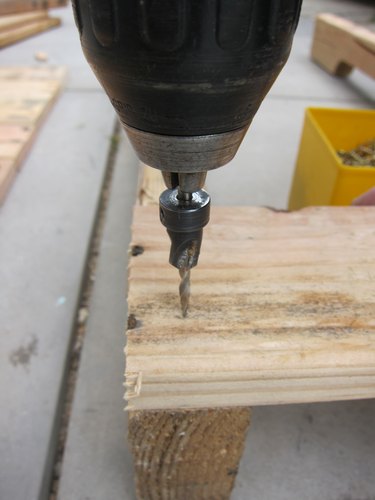
It is important to pre-drill holes with the countersink before putting screws in to avoid splitting the wood.
Step 5:
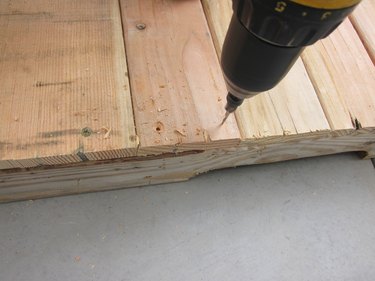
Fill in the remaining space between the pallet supports by attaching the rest of the one-by-fours. Use two screws to secure each side of the boards, spacing them evenly from the sides of the slats. In this project, the screws were drilled in about 5/8 inches from each side of the slat.
Step 6:
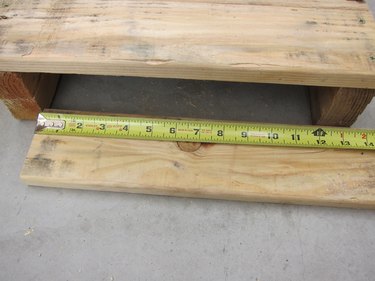
Measure the inside gap between the pallet supports and then cut the last pieces of the one-by-fours to create a skirt for each side of the bench.
Step 7:
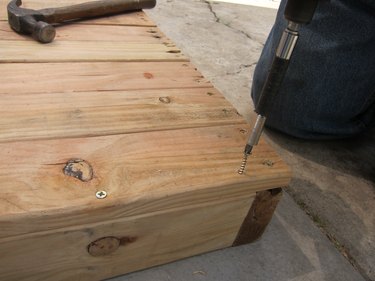
Place one of the side skirts in the gap between the pallet supports and drill three screws from the top of the bench down into the side skirt, one at each end and one right in the middle. Repeat on the other side.
Step 8:
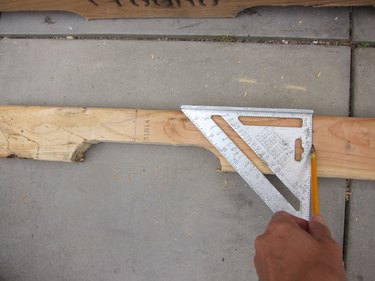
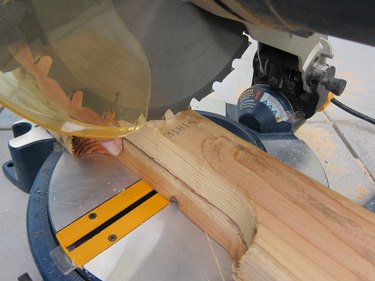
Cut the last pallet support (scalloped two-by-four from the middle of the pallet) into four 10-inch long pieces, measuring and marking it first with a pencil.
Tip
The wood from one single pallet was used for this project, so the bench is only 10 inches high. If you want a higher bench, cut four pieces from two-by-fours to the length of your choice, 12 to 18 inches being a standard bench height.
Step 9:
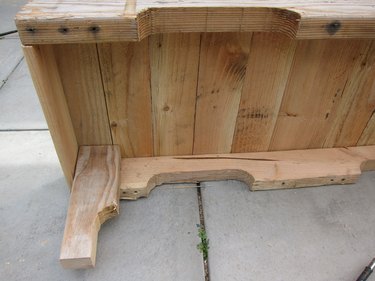
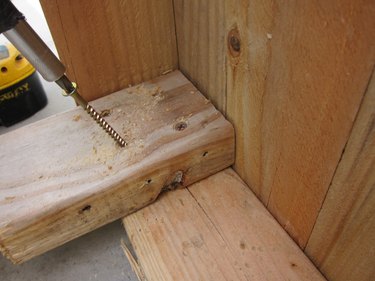
Place the first leg under one corner of the bench top as shown. Use 2 1/2 inch screws in four places to secure it, making sure to pre-drill the holes first.
Tip
These screws will have to be drilled in at an angle because there is no space for the drill to fit under the lip of the bench.
Step 10:
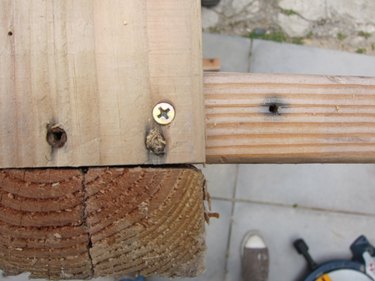
Add a 1 1/2-inch screw through each side of the side skirts into each of the legs.
Step 11:
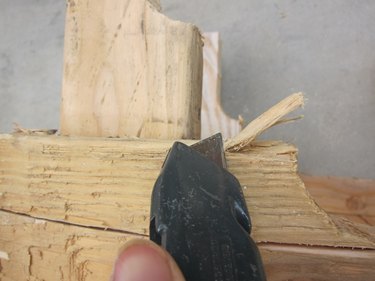
Use a utility knife to carefully remove any large stray pieces of wood.
Step 12:
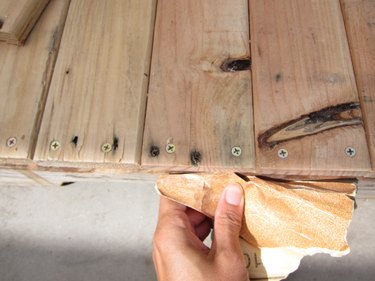
Sand the bench with sandpaper to remove any splinters.
Step 13:
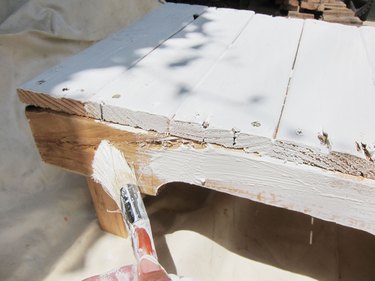
Paint the bench with two coats of primer, allowing time to dry in between coats.
Step 14:
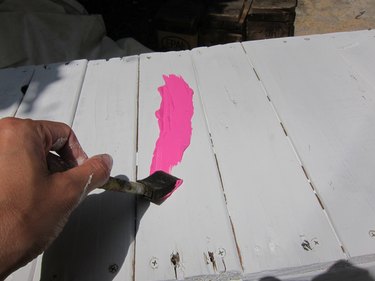
Paint each plank of wood on the top of the bench a different color using acrylic paint. Hold a plastic scraper between the planks as you paint to keep the lines neat. Touch up any mistakes with fine-tipped paintbrushes. Paint the bench base with glossy white paint. Allow to dry.
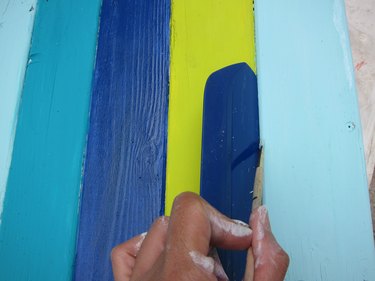
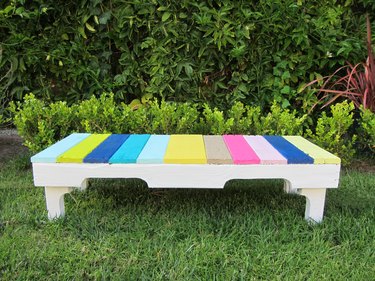
This colorful pallet bench would look equally lovely outdoors or indoors.