Boarding1Now/iStock/GettyImages
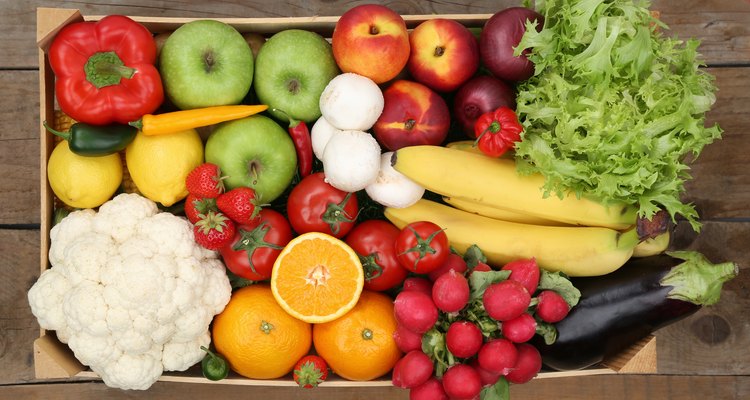
You can wash away the germs and pesticides from your fresh fruit without using a pricey fruit and vegetable wash or spray. Washing your fruit in a solution of hydrogen peroxide not only sanitizes the fruit's surface and reduces pesticide residue and other contaminants, it can also extend the shelf life of your cut melon and other similar fruits. All you need to make your own eco-friendly fruit wash is a bottle of hydrogen peroxide -- preferably the 35 percent food-grade type -- and water.
Fill your sink with water. If you're using 35 percent food-grade peroxide, add about 1 tablespoon to the sink.
Soak firm produce, such as apples and pears, for about 15 minutes. Soak berries or other fruits with thin peels, such as peaches, for about 5 minutes.
Drain the sink and rinse the fruit with fresh water.
Lay the fruit on a kitchen towel in a single layer to let it dry completely before you pack it up to put in the refrigerator, or place it in your fruit bowl.
Related Articles
Fresh Homemade Orange Juice Will Stay ...
How to Freeze Papaya

Best Fruit Juices to Cleanse the Colon
How Do I Prepare Pears for Freezing?
How to Store Lemons & Limes

How to Store Apples
How to Bake Nectarines Like Peaches
How to Peel Guava
How to Clean a Kiwi so the Skin Is Safe ...

How to Make Elderberry Jam

How to Make a Fruit Reduction

How to Sterilize Eyeglasses

How to Keep Peach Preserves From ...
How to Clean Fruits & Vegetables With ...
How to Wash Viscose Clothing

How to Get Rid of Calcium Buildup in ...

How to Keep Fruit Salad Fresh
How to Soak Dried Fruit
Does a Kiwi Turn Brown?
How to Make Healthy Smoothies With a ...
References
Tips
- Find 35 percent food-grade peroxide in health food stores or online. It's preferable for use in food preparation since the 3 percent pharmaceutical-grade peroxide that you're used to seeing contains stabilizers such as sodium stanate, acetanilide and phenol -- not exactly the chemicals you want to put into your body.
- Increase the effectiveness of your homemade fruit wash by combining it with the power of vinegar. The acetic acid in vinegar can boost the effects of the hydrogen peroxide wash to eliminate nearly 10 times as many organisms. Add an equal part of vinegar to the sink, or fill two clean spray bottles -- one with apple cider or white vinegar and the other with a solution made with 1 ounce of peroxide and 11 ounces of distilled water, which is the equivalent of a 3 percent solution. Spray the fruit with each, let it rest for a few minutes and rinse the fruit with water.
Warnings
- Always use 35 percent food-grade hydrogen peroxide when it is diluted. Avoid coming into direct contact with undiluted food-grade peroxide since it can burn your skin. If you come into contact with it, immediately flush the affected area with water.
Writer Bio
Caryn Anderson combines extensive behind-the-scenes writing experience with her passion for all things food, fashion, garden and travel. Bitten by the travel bug at the age of 15 after a trip to Europe, Anderson fostered her love of style and fashion while living in New York City and earning her degree at New York University.