Things You'll Need
Halved wine barrel
Potting soil
Compost
Sand
Pruners
Stake
Plant ties
Manure
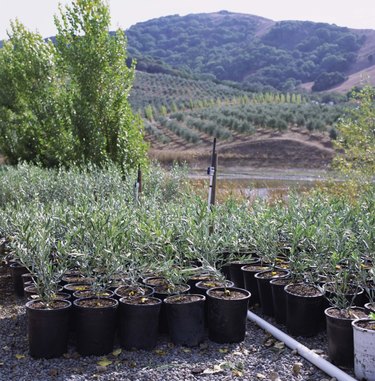
Olives are native to the Mediterranean, Asia and parts of Africa. They have been cultivated for centuries and perform well in containers. For best topiary results, a smaller species such as Picholine, Manzanillo, Frantoio or Arbequina should be selected. The trees can handle severe pruning and can be kept a smaller size. Creating an olive tree topiary starts with training when the tree is young. One- or 2-year-old trees are ideal. The plant should be potted in a container that is at least 4 inches larger than the root ball, in well drained soil and in an unglazed pot that can "breathe".
Step 1
Fill the halved wine barrel with a mixture of 2 parts potting soil, 1 part compost and 1 part sand.
Video of the Day
Step 2
Remove the young olive tree from the nursery pot and spread the roots out. Check the roots for rotten areas and trim off any long roots that are binding the root system. Plant the tree in the barrel at the same level it was growing in the nursery pot.
Step 3
Select the straightest, strongest vertical stem to use as the central leader and trunk. Prune off any suckers and peripheral vertical growth. Push a stake into the barrel 2 to 3 inches from the central leader and tie it to the new trunk with plant ties.
Step 4
Water the plant twice per week in the hotter season and once in fall and spring. Water deeply until the soil is evenly moist but not soggy. Fertilize in spring with 3 inches of manure worked into the top 3 to 5 inches of soil.
Step 5
Shape the topiary after the tree has established itself in the barrel for one year. Prune in late winter to early spring. Remove any suckers that have grown at the base of the stem and shoots that sprout from the trunk.
Step 6
Cut the plant into the crown shape you want. It is best to let the crown grow naturally, but you can shape it into a ball if you wish. This will sacrifice flowers and fruit and requires more consistent maintenance than a natural habit. Trim terminal grow back to a previous growing point to prevent ragged edges.
Tip
A halved wine barrel is a good size to grow a topiary, and it adds rustic appeal.
Video of the Day