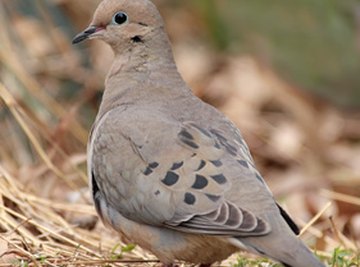
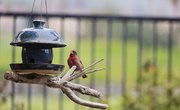
Feeding wild birds and doves helps these wild creatures get through the winter months when other food sources are scarce. During the spring and summer, you are helping provide birds with easy access to food to feed their babies. You do not have to spend a fortune to feed wild birds. A couple feeders and some inexpensive birdseed is all you need.
- Bird feeder
- Orange or grapefruit rind
- Needle
- String or fishing line
- Birdseed
- Fruit
- Nail
- Suet
- Suet cage
Keep your bird feeder clean to help prevent diseases from spreading. Dirty bird feeders can also contribute to intestinal problems and bacterial infections in birds. Empty your bird feeder regularly and wash it with a mild soap. Rinse and dry it thoroughly before refilling it.
Remove your bird feeder for short periods if too many birds begin gathering at your feeder. Overfeeding is unnatural and too many birds trying to feed at the same place can lead to aggression.
Purchase a premade bird feeder from a superstore or lawn and garden store. Many simple bird feeders are inexpensive. Hang your bird feeder near a window or attach it to a pole that you can stake in the ground near your home. Consider what types of birds you want to visit your feeder. Many wild birds will feed out of any standard hanging or platform feeder, but goldfinches and chickadees prefer tube feeders where they can avoid competition with bigger birds.
Cut an orange or grapefruit in half if you want to make your own bird feeder. Eat or remove the contents and let the rind dry out. Use a needle to poke holes in the sides and thread strong string or fishing line through the holes so that the rind acts as a cup to hold the birdseed.
Choose birdseed based on what types of birds you want to attract. Many wild birds, including mourning doves, feed on sunflower seeds, safflower seed and thistle seeds. Mixes, such as millet, also attract many different kinds of birds.
Leave fruit out for migrating wild birds. Cut oranges and apples in half and place them on a nail or spike where birds can get to them. Berries, melons and bananas are other good fruits to leave out for robins, bluebirds, woodpeckers, warblers, sparrows and several others. Be careful about leaving out grapes or raisins. These fruits can be toxic to some birds if they consume them in large quantities.
Purchase a suet cage from a home and garden store or superstore. Fill it with suet blocks in the winter. Suet mixes animal fat or peanut butter in with birdseed and helps give birds and doves the energy they need during the colder months.
Things You'll Need
Warnings
References
Warnings
- Keep your bird feeder clean to help prevent diseases from spreading. Dirty bird feeders can also contribute to intestinal problems and bacterial infections in birds. Empty your bird feeder regularly and wash it with a mild soap. Rinse and dry it thoroughly before refilling it.
- Remove your bird feeder for short periods if too many birds begin gathering at your feeder. Overfeeding is unnatural and too many birds trying to feed at the same place can lead to aggression.
About the Author
Amanda Knaebel is a self-professed gadget geek and loves all things tech, both new and old. Amanda has been working as a freelance writer for over 10 years on topics including technology, health, fitness, nutrition, gardening and many more. She has also worked with Fortune 50 tech and financial companies, both in technical support and content production.
Photo Credits
Mourning Dove (Zenaida macroura) in spring image by Steve Byland from Fotolia.com