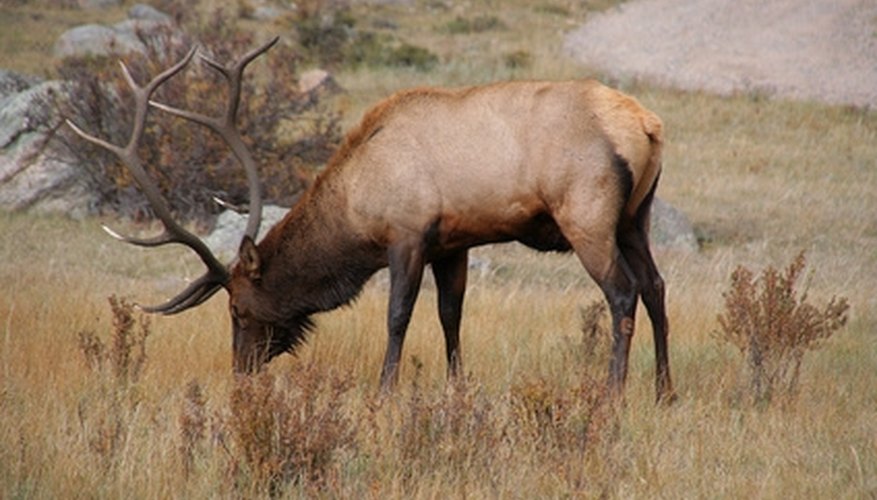


Male (bull) elk grow a new set of antlers every year, beginning when they are 1 year old. They shed these antlers every year in late winter or early spring and begin to grow a new set of antlers in spring.
The Shedding Process
Antler shedding is linked to decreasing testosterone levels. As testosterone levels decrease, special cells called osteoclasts form at the juncture of the skull and antler. Osteoclasts reabsorb calcium from the antler, weakening the joint between the skull and antler until the antler drops.
Time of Year
Most elk shed their antlers from February until April. Large bulls tend to drop their antlers first, with young bulls carrying their antlers longer.
Shedding Curiosities
Individuals within the same elk herd may drop their antlers at different times. Also, an individual animal may drop the second antler days or weeks after dropping the first.
Looking for Shed Elk Antlers
Looking for elk sheds is a popular activity. People use elk antlers to make chandeliers, belt buckles, knife handles and other rustic crafts, as well as for medicinal purposes. Each May, Boy Scouts collect hundreds of elk antlers in the National Elk Refuge in Jackson, Wyoming, to be sold at an antler auction.
Shed Hunting Laws
Wildlife biologists discourage shed hunters from looking for antlers until after the snow melts and elk can find food. In 2009, the Wyoming Legislature adopted a law giving the Wyoming Game and Fish Department the power to regulate shed hunting in some areas to protect wintering animals from harassment.
References
Writer Bio
Joe Shead is a freelance writer specializing in outdoor writing. He has written for numerous national and regional outdoor magazines on various topics from hunting to fishing to his pet subject, shed antler hunting.