
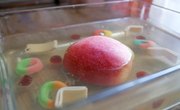
Animal cells are a part of almost every middle school science curriculum across the country. Rather than doing typical cell drawings, allow the students to create edible cell models. Your students will be excited about the project and can be creative while making the cell model accurate at the same time. Of course, the student can be allowed to eat the finished products, after the project has been graded.
Cookie Cell Model
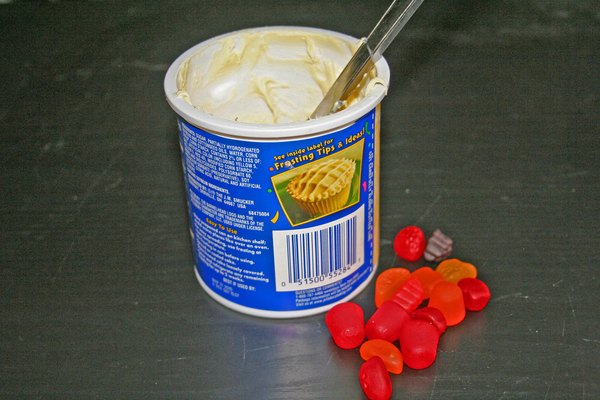
Divide your students into groups of three or four. Give each group a cookie, frosting and a variety of the candies. Students must wash their hands before they begin.
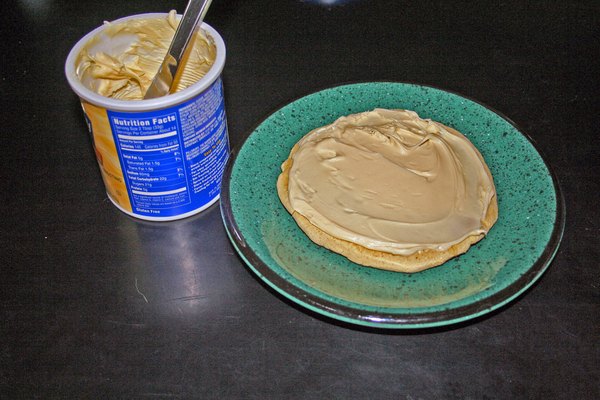
Spread the frosting over the cookie for the cell's cytoplasm. The cookie itself is the cell membrane. Require your students to design a key or legend for their model as they are making it.

Allow students to choose and mold candies into different shapes to make each cell model original. Give them the minimum number of organelles required for an acceptable model, but encourage them to do as much as they have time to add.
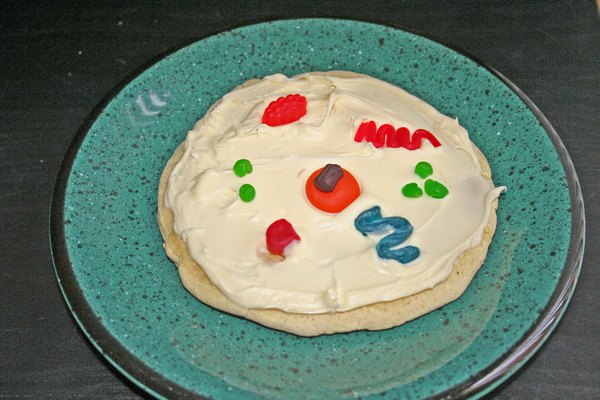
Have each group present a cell model, or allow the students to visit each other's tables to see what the other cell models are like. Students can ask questions of one another as they visit.
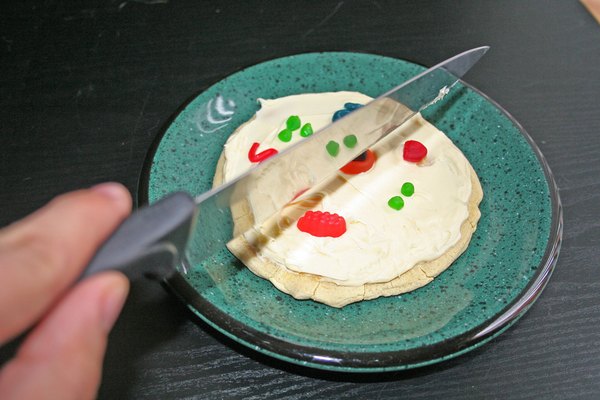
Divide the models into pieces after the project is finished. Each group should eat only the cookie it worked on, for the sake of cleanliness.
Jello Cell Model
- 6- to 8-inch sugar cookies
- 1 can ready-made frosting
- Chocolate pieces, gummy and chewy candies
- Quart Ziploc bags
- Light-colored Jello
- Gummy and chewy candies
Allow your students to be creative.
Ask another teacher to walk through and ask questions about each organelle and its function as students are working.
Be careful when choosing candies for the Jello cell model. Jelly beans and other coated candies will bleed colors into the Jello and ruin the project.
Use lemon, orange or other light-colored Jello so you can see the organelles in the finished model.

Give each student or group of students a Ziploc bag for this version of a cell model. Allow each group to add about a cup of light-colored Jello to the bag. The Jello is the cytoplasm, and the Ziploc bag represents the cell membrane.
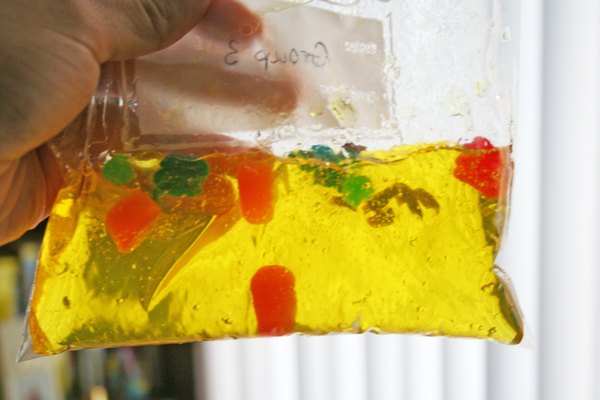
Allow students to choose their own candies and mold them into different shapes to make the organelles. Ask them to make a key for the model as they work.

Zip the top of the model tightly and apply tape across the top to keep the cell models from leaking. Students can snack on the leftover supplies.
Things You'll Need
Tips
Warnings
References
Tips
- Allow your students to be creative.
- Ask another teacher to walk through and ask questions about each organelle and its function as students are working.
Warnings
- Be careful when choosing candies for the Jello cell model. Jelly beans and other coated candies will bleed colors into the Jello and ruin the project.
- Use lemon, orange or other light-colored Jello so you can see the organelles in the finished model.
About the Author
Susan King is a teacher with 27 years experience with all ages, grade levels and ability levels, including teaching in China. She has written a book, "The Road to Rebecca," about adopting from China. She graduated from Texas A&M University. She also has a ThM from Colorado Theological Seminary in Christian Counseling and recently received her PhD.
Photo Credits
Shane Stillings/Demand Media