Discovering a fossil can feel like stumbling upon a great treasure and it really is quite a special find. Fossils can be formed from animal bones, leaves and shells, they are naturally formed and they are a pressing or an impression of a prehistoric sample of life.
Fossils can either be body or trace fossils. Body fossils are imprints of animal or plants that were once alive. Trace fossils show evidence of where a living organism has been, they could be tracks or burrows where animals have lived.
What is a Fossilized Shell?
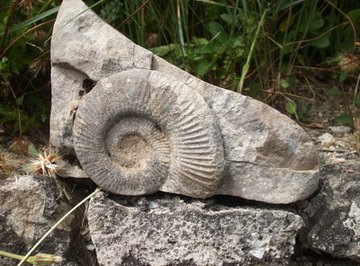
One of the most common fossils are different types of fossilized shell. One of the most common types are ammonites, which are fossils of coiled up shells – a type of cephalopod. These kinds of seashell fossils are from animals that lived in the sea between 240 and 65 million years ago. Bivalve fossils (like clams or scallops) are another related type of shell fossil, along with crinoid and coral groups that are extremely common, but they differ from these shell type organisms.
There are many other invertebrate organisms that are common types of fossils, such as bryozoans, mollusks, mussels, sponges, starfish, arthropods, and turritella. Fossil identification of larger vertebrate animals (like mammals or reptiles) is much less common. Fossil sites – often reserved for professional paleontology – have the highest concentration of these larger organisms, so amateur paleontologists will find them much less frequently in the field.
Tips
Although they are not individual organisms, shark teeth are easy to find. Individual sharks grow and lose hundreds of teeth over a lifetime leading to a high abundance of fossilized shark teeth in nature.
How are Sea Fossils Formed?
Seashell fossils are formed when a sea animal with a shell dies, and their body and shell begin to decompose. Seashell fossils are more common than other fossils because the shell is hard and therefore more likely to be preserved, compared to organisms with only soft tissue. Animals without a shell or bones hardly ever become fossilized. These remains are often captured in sediment (which eventually forms sedimentary rock) or other mineral mediums. The calcium carbonate composition of seashells means they are predisposed to fossilize easily, as the shell is simply preserved along with the surrounding rock.
Sea fossils are still quite rare as it takes so long for an organism to decompose and leave an impression. By the time this process is complete, the remains could have easily been moved by natural forces or by other animals. That's one of the reasons why fossils are so special. The oldest fossil, according to Astronomy.com, is captured on a 3.5-billion-year-old rock from Western Australia.
How to Identify Sea Fossils
If you are lucky enough to find a fossilized shell the first thing you should do is to carefully examine it and take a few photographs. You can try to match up the unique markings on the shell with glossaries found online on natural history museum websites to try to work out what type of animal left the markings.
Ammonites are not the only shell fossils. Brachiopods are non-coiled shell fossils and can be black, white, brown or gray. Sea urchins that have been preserved as a fossil are called echinoids and gastropods are fossils of snails. Look closely at your fossil and try to work out which one of these classifications fits best.
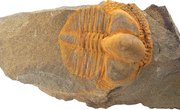
If your fossil doesn't have a shell-like shape at all it might be a trilobite – these organisms look a bit like bugs.
Once you have classified your fossil, look after it, because it really is special. However, remember to check the local laws where you collect your specimen: depending on where you are, private collection may be banned.
References
- Fossil Identification: Common Fossils
- American Geosciences Institute: How Do Fossils Form?
- Idaho State University: What is a Fossil?
- Ask a Biologist: Time to Fossilisation
- Astronomy: Oldest Fossils Ever Found Suggest Life in The Universe is Common
- Guardian: To Collect or Not To Collect: Are Fossil-Hunting Laws Hurting Science?
Resources
Tips
- Work from general appearance to details.
- Museum websites often have good photographs of fossils.
Warnings
- Dendrites are crystal formations that resemble fossils but are not fossils.
- Don't collect fossils on private property unless you have permission from the owner.
About the Author
Fiona Tapp is a freelance writer and educator. Her work has been featured on The Washington Post, HuffPost, The Toronto Star, The Nest, Brit+Co, and others. She writes about a variety of topics including Homes, Parenting, Education, and Travel. Fiona is a former teacher and masters degree holder.
Photo Credits
fossile image by robert casacci from Fotolia.com