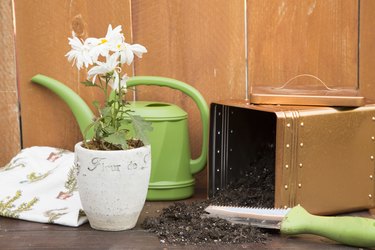
Potted plants that fail to thrive and eventually die are most often the victim of over-watering and poor drainage. Excess water gathers in the bottom of the pot, becomes stagnant and saturates the soil, promoting root rot. Plants rarely recover when their roots become afflicted. However, some of the most beautiful pots do not have drainage holes, and if you can't drill a hole or two without risking ruining the pot, double-potting is the answer.
Step 1
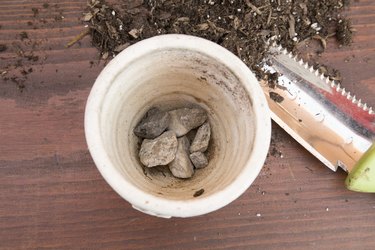
Arrange a layer of river rocks, lava rocks or broken crockery in the bottom of the decorative pot.
Video of the Day
Step 2
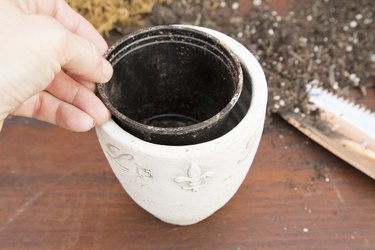
Place a plastic pot or pot liner that has drainage holes inside the decorative pot and on top of the rocks or crockery. Check to see if the top of the plastic pot or liner is at or below the rim of the decorative pot. Add more material at the bottom of the decorative pot if the plastic pot or liner rim is much more than 1" short of the decorative pot rim. Remove material beneath, or trim the rim using sharp kitchen shears or a knife if it extends above the top of the decorative pot.
Step 3
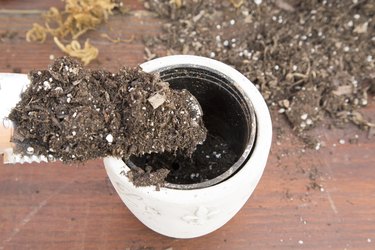
Pour potting soil into the liner or pot until it is half-full. Place the plant in the pot, with the root or root-ball centered on the soil. Add or remove soil from beneath the plant until the soil line around the plant (or the place on the stem where the soil line would be, in the case of a bare-root plant) is 2 inches below the rim of the plastic liner or pot.
Step 4
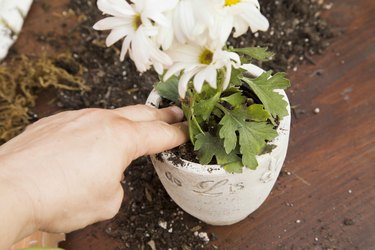
Fill in potting soil around the plant by scooping potting soil into the areas around the roots with a trowel, firming the soil with your hands as you go.
Step 5
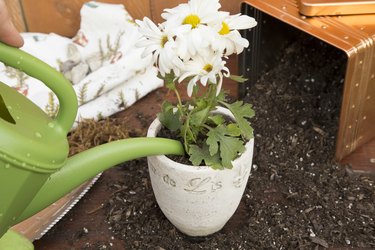
Water the potted plant thoroughly with water from the watering can until water begins to drain from the bottom of the pot. Allow the water to soak into the soil.
Step 6
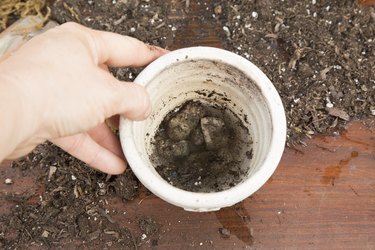
Pull the plastic pot or liner out of the decorative pot to remove standing water in the bottom of the decorative pot after you have finished watering and allowed a few minutes for the water to flow through the soil. Removing excess water reduces the chances of harboring bugs and mildew growth.
Step 7
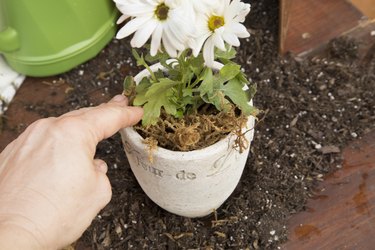
Conceal the upper rim of the pot or liner by spreading a layer of sphagnum over the soil surrounding the plant.
Video of the Day