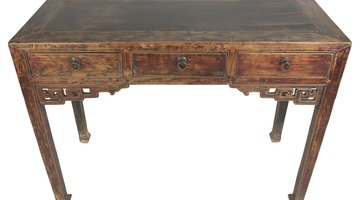
How to Make Japanese Furniture

How to Make Japanese Furniture thumbnail
Making Japanese furniture requires knowledge of Japanese woodworking and joinery.

If you enjoy working with wood and are inspired by the seamless, simple elegance of Japanese-style furniture, creating your own functional work of art is simple, once you learn the differences between Japanese and Eastern carpentry. Stock up on furniture-grade Japanese cedar, pick up a few tools, arm yourself with an understanding of Japanese joinery and you'll be ready to make your own furniture. Does this Spark an idea?

Things You'll Need

  • Japanese cedar planks
  • Hammer
  • Chisel
  • Wood glue
  • Rice paper
Show More

Instructions

    • 1

      Study the art of Japanese joinery and how it relates to furniture. Western furniture relies heavily on connecting wooden frames with the liberal use of adhesives, nails or staples and wood glue. Japanese furniture makers developed an entirely different method of fitting wood together and have used this method for centuries. They use adhesive where necessary, but much of the framework is fitted together in an almost tongue-in-groove fashion to provide clean simple lines. Check out books from your local library or go to websites such as Japanesewoodworker.com and Japanesecarpentry.com.

    • 2

      Research the specific type of furniture you want to create. The most popular Japanese furniture in America is the shoji (sliding) screen, covered with rice paper and found in many households and businesses, and the tansu storage chest, which is recognizable by its resemblance to a staircase. Or you can make a wooden dining table, or kotatsu---a low, square or rectangular table with a built-in heater and coverlet. If possible, find a completed version of the project so you get a three-dimensional example to work from.

    • 3

      Plan your furniture on paper before you start. If you're working from a blueprint, make sure you have enough wood in the correct dimensions before starting the project. Always follow the woodworking rule of thumb: "Measure twice, cut once." This is especially important when working with Japanese furniture, because you can't cover any cutting mistakes with nails or glue.

    • 4

      Chisel notches into the wood large enough to accommodate the connecting pieces, using the hammer to adjust the pressure behind each stroke. The notches should be deep enough to let the connecting planks slide in seamlessly, almost like a jigsaw puzzle. Depending on what you've chosen to make, the size and depth of the notches will vary. Keep your chisels very sharp.

    • 5

      Carve connecting pieces with tabs or pegs that fully extend into the freshly-made notches. You can use a saw instead of a chisel for this task, but a chisel will allow you more far more accuracy and control over the angle of the cut.

    • 6

      Insert the connecting pieces into the notched planks tongue-in-groove style, leaving a seamless edge when finished. You can use a small amount of wood glue to attach the connecting piece as it slides in, but the glue should not be visible when the pieces are fully connected. The durability of the furniture should ideally come from the tight, "locked-in" aspect of its pieces and shouldn't rely heavily on glue.

    • 7

      Add finishing touches. A shoji screen needs to be covered with rice paper when the frame is finished, and the table surface of a kotatsu will require a space large enough for the heater to be installed. Japanese furniture doesn't usually need much time to settle or dry, as you should be using minimal or no adhesive.

Tips & Warnings

  • Because Japanese cedar is grown locally in America as well as Japan, you shouldn't have to pay any import tax unless you're buying lumber shipped directly from Japan.

Related Searches:

References

  • Photo Credit furniture over white image by Lars Christensen from Fotolia.com

Comments

You May Also Like

  • How to Design Japanese Furniture

    Japanese design is distinguished by the use of neutral tones, simple lines, organic materials and heavy hard wood. Most tables are low,...

  • Japanese Furniture Styles

    While modern Japanese homes resemble Western-style homes in many ways, traditional Japanese furniture has its own unique look. Japanese furnishings tend to...

  • Japanese Joinery Tools

    Japanese Joinery Tools. Japanese joinery is a unique woodworking method established without the use of nails, staples or glue to hold the...

  • Woodworking Tools for Joinery

    Woodworking Tools for Joinery. Joinery is the process of combining two or more pieces of wood together without nails, bolts or screws....

  • How to Make and Build Paper Furniture

    Create an unusual conversation piece for your living room by making furniture out of paper. Discarded newspapers and magazines are readily available,...

  • Japanese Traditional Furniture

    The simple yet functional aspects of traditional Japanese furniture, or kagu, are highly sought around the world. Traditional furniture reached its zenith...

  • How to Identify the Maker of Wood Carvings

    It is not uncommon that a work of art such as a beautiful wood carving will catch the eye of a passerby....

  • About Asian Furniture

    Asian furniture features unique designs and construction techniques, including lacquering, chinoiserie and simple forms. It not only is popular in Western countries...

  • Components for Building Miniature Furniture

    Components for Building Miniature Furniture. One of the most rewarding and useful pastimes for a miniature enthusiast is the building of dollhouse...

Related Ads

Featured