How to Measure Elk Antlers

How to Measure Elk Antlers thumbnail
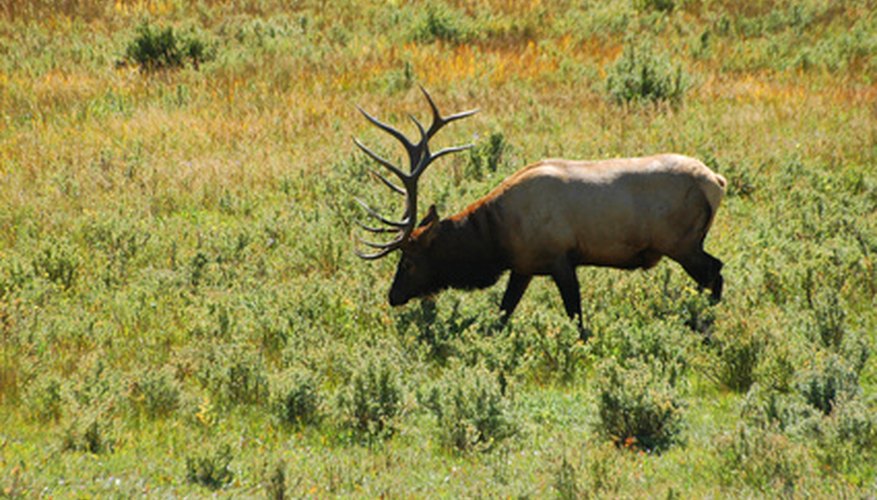
Being able to gauge elk antler measurements in the field is an art.

Hunting elk is a sport, no different than any other, and as in any sport, measuring, scoring and quality go hand in hand. Key measurements on typical or non-typical American elk, Roosevelt's or tule elk antlers are needed to obtain the score. The method used for measuring elk antlers hasn't changed since the 1920s when Boone and Crockett club member Prentiss Gray established an official measurement and scoring system for North American trophy animals. It may seem complicated at first, but all you need to measure elk antlers is a 1/4-inch wide flexible steel tape.

Things You'll Need

  • 1/4-inch wide flexible steel tape
  • Pen
  • Paper
Show More

Instructions

  1. Typical American Elk

    • 1

      Count and make a list of each point on the right and left antlers that exceed 1 inch in length. Use two columns on your list, one marked right antler and one marked left antler. It will help you to keep your measuring chart organized and easy to read. Each typical point would be marked G-1, G-2, etc. starting with the point that extends from the main beam closest to the skull.

    • 2

      Determine the tip-to-tip spread by measuring the distance between the tips of the left and right main beams.

    • 3

      Determine the greatest spread measurement by locating and measuring the widest spread between two perpendicular antler main beams or points when measured at a right angle to the center of the skull.

    • 4

      Determine the inside spread of the main beams by measuring the widest point between the left and right main beams when measured at a right angle to the center of the skull.

    • 5

      Measure the length of the main beams by measuring from the bottom of the burr, which is where the antler flattens out at the elk skull, to the tip of the main beam.

    • 6

      Measure the length of all normal elk points or "Gs," that extend from the main beam from where the point connects to the main beam to the outside tip of each point, following the curve of the point.

    • 7

      Measure the circumference of the narrowest point between the first and second points on each antler and mark them on your list as "H-1s." Continue measuring the smallest circumference between the points only stopping after you have measured between the fourth and fifth points which are the "H-4s" and the last measurements needed for scoring your elk antlers.

    Non-Typical American Elk

    • 8
      Two bull elks with similar antlers.
      Two bull elks with similar antlers.

      Count and make a columned list of each point on the right and left antlers that exceed 1 inch in length, one column is marked right antler and one marked left antler. Each normal point would be marked G-1, G-2, etc. and each abnormal point (any point that originates from a point or from the bottom or sides of the main beam or extra points, that are not generally paired) would be marked E-1, E-2, etc. starting with the point that extends from the main beam closest to the skull.

    • 9

      Determine the tip-to-tip spread by measuring the distance between the tips of the left and right main beams.

    • 10

      Determine the greatest spread measurement by locating and measuring the widest spread between two perpendicular antler main beams or points when measured at a right angle to the center of the skull.

    • 11

      Determine the inside spread of the main beams by measuring the widest point between the left and right main beams when measured at a right angle to the center of the skull.

    • 12

      Measure the length of all abnormal elk points or "Hs," that extend from where the point connects to the main beam or another point to the outside tip of each point, following the curve of the point.

    • 13

      Measure the length of the main beams by measuring from the bottom of the burr, which is where the antler flattens out at the elk skull, to the tip of the main beam.

    • 14

      Measure the length of all normal elk points or "Gs," that extend from the main beam from the where the point connects to the main beam to the outside tip of each point following the curve of the point.

    • 15

      Measure the circumference of narrowest point between the first and second points on each antler and mark them on your list as "H-1s." Continue measuring the smallest circumference between the points only stopping after you have measured between the fourth and fifth points which are the "H-4s" and the last measurements needed for scoring your elk antlers.

    Roosevelt's or Tule Elk

    • 16
      Bull elk with antlers in velvet
      Bull elk with antlers in velvet

      Count and make a columned list of each point on the right and left antlers that exceed 1 inch in length, one column is marked right antler and one marked left antler. Each normal point would be marked G-1, G-2, etc., each abnormal point (any point that originates from a point or from the bottom or sides of the main beam or extra points, that are not generally paired) would be marked E-1, E-2, etc, each crown point (any points occurring on the royal, on other normal points, on any crown points, and any points on the bottom and sides of main beam after the royal) would be marked I-1, I-2, etc., starting with the point that extends from the main beam closest to the skull.

    • 17

      Determine the tip-to-tip spread by measuring the distance between the tips of the left and right main beams.

    • 18

      Determine the greatest spread measurement by locating and measuring the widest spread between two perpendicular antler main beams or points when measured at a right angle to the center of the skull.

    • 19

      Determine the inside spread of the main beams by measuring the widest point between the left and right main beams when measured at a right angle to the center of the skull.

    • 20

      Measure the length of all abnormal elk points or "Hs," any points in non-typical in location or pattern that are located below the G-4 point from the point where they connect to the main beam or another point to the outside tip of each point, following the curve of the point.

    • 21

      Measure the length of the main beams by measuring from the bottom of the burr, which is where the antler flattens out at the elk skull, to the farthest most tip of the main beam.

    • 22

      Measure the length of all normal elk points or "Gs," that extend from the main beam from the where the point connects to the main beam to the outside tip of each point following the curve of the point.

    • 23

      Measure the circumference of narrowest point between the first and second points on each antler and mark them on your list as "H-1s." Continue measuring the smallest circumference between the points only stopping after you have measured between the fourth and fifth points which are the "H-4s."

    • 24

      Measure the length of the crown points located from the G-4 to the end of the beam, including points that occur on the G-4, on other normal points beyond the G-4, on the crown points, and on the bottom and sides of main beam after the G-4 from the point where they connect to the G-4, main beam or another point to the outside tip of each point, following the curve of the point.

Tips & Warnings

  • All measurements are rounded to the closest 1/8th-inch.

  • Boone and Crockett's website has scoring sheets available in PDF if you do not want to create your own (see Resources section).

Related Searches:

References

Resources

  • Photo Credit bull elk image by Mike & Valerie Miller from Fotolia.com Two male elk proudly displaying their racks image by John Sfondilias from Fotolia.com back head of american elk or wapiti image by Pierrette Guertin from Fotolia.com

Comments

You May Also Like

  • How to Score Elk Antlers

    Your elk hunting trip was a success and you know your bull is a bruiser, but does he qualify for the record...

  • How to Measure Deer Horns

    After taking a monster buck during hunting season, hunters like to measure their deer's antlers so they can compare the size to...

  • How to Score a Whitetail Deer With Antlers

    Whitetail deer hunting is an exciting and action-packed sport. When that big buck steps into your sights and all you can see...

  • How to Judge a Trophy Elk

    Judging trophy elk is also known as "scoring an elk." While the size, age, color and height of an elk are important...

  • How to Measure Deer Antlers

    There's nothing quite like downing that trophy buck during deer season. Many hunters try to explain to their friends the size of...

  • How to Measure Whitetail Antlers

    The crisp, cool air of an autumn morning ushers in thoughts of trophy whitetail bucks for many hunting enthusiasts. Whitetail are one...

  • How to Find Elk Antlers

    Elk antlers come from bull elk, and as the animal gets older, each set of antlers that grow in will be larger...

  • How to Sell Elk Antlers

    Male elk shed their antlers annually. The old antlers can be found on the ground in the woods beginning in March. Before...

  • Elk Hunting Preserves in Idaho

    Idaho sees thousands of elk hunters every fall, but the difficulty of the hunt leaves many hunters unsuccessful. With elk tags over...

  • How to Restore Elk Antlers

    If you have elk antlers that have become worn or damaged, there are several things that can be done to fix them....

  • How to Measure Deer Antlers in Inches

    Each spring, deer produce a new set of antlers. As the antlers develop, they are covered in a thin sheath of fuzzy...

  • How to Construct a Coffee Table Using Elk Antlers

    Elk antlers may be easily added to an old, round kitchen table top to create a coffee table. The process starts by...

  • Homemade Elk Bugles

    Any successful elk hunter will more than likely carry an elk bugle in a pack. Elk bugles are commercially produced by call...

  • How to Hunt for Deer & Elk Horns in Idaho

    Every winter, deer bucks and elk bulls shed their antlers. Gathering these trophies from the ground is known as "shed hunting." Shed...

  • How to Measure the Spread on Deer Horns

    Several methods exist for scoring deer antlers, but the most widely used is Boone and Crockett. This system includes taking measurements along...

  • How to Sell Antler Sheds

    Antler sheds from elk and deer can sell for up to $20 a pound, according to shed collectors in a "USA Today"...

  • How to Measure the Shed Antlers on a Whitetail Deer

    Whitetail deer males typically shed their antlers during the months of January to March according to the University of Michigan Museum of...

  • How to Find Elk Sheds

    Elk antlers are also called sheds. Only make elk grow antlers. Bull elk shed and grow a new set of antlers each...

Related Ads

Featured