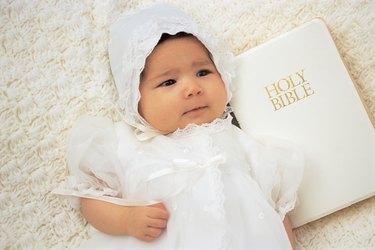
How to Wash a Delicate Antique Baby Dress

How to Wash a Delicate Antique Baby Dress thumbnail
A little bit of care will preserve precious keepsakes for future generations.

Many people have packed away an antique baby dress with the hope that a grandchild might wear it someday, only to find that, when that day comes, the garment has discolored, been attacked by moths or deteriorated beyond wear. With proper care, you can avoid this disappointment. You should clean antique linens once a year, even if they've been in storage, to remove dust and other soil that could attract insects. Never dry-clean old white cotton or linen, because the chemicals may yellow the fabric. Hand-washing with care is the key to preserving your keepsake.

Things You'll Need

  • Bucket
  • At least three towels
  • Baking soda
  • Gentle laundry soap
  • Glycerin
  • Small embroidery scissors
  • Vinegar
Show More

Instructions

    • 1
      Always handle delicate fabric with clean hands.
      Always handle delicate fabric with clean hands.

      Wash your hands before touching the garment to remove dirt, natural oils, lotion and any fragrance. Rubbing your hands with a paste of water and baking soda will also neutralize skin oils.

    • 2

      Use small embroidery scissors to remove from the dress any metal trim that might rust, such as buttons, snaps or pins.

    • 3
      Use white towels, because colored towels can "bleed" dye or transfer color onto delicate textiles.
      Use white towels, because colored towels can "bleed" dye or transfer color onto delicate textiles.

      Line a bucket with a clean, white towel and fill it with warm water. You will use this towel to lift the baby dress out of the bucket when you are done washing it. The weight of water can tear delicate fabric; the towel supports the garment and diffuses its weight.

    • 4

      Pre-soak the dress in one part glycerin (can be purchased at most drugstores) and four parts cold water. In their book "Kovels' Quick Tips," antique experts Ralph and Terry Kovel recommend this method to help remove stains and discolorations.

    • 5

      Remove the dress from the bucket by lifting it with the towel. Empty out the solution from Step 4 so you can add clean water to the bucket.

    • 6

      Dissolve a gentle soap (Michele Durkson Clise, author of "The Linen Closet," recommends Ivory Flakes or Orvus) in warm-to-hot water in the bucket. Return the dress to the water by lifting it on the towel. Gently swish the water to create currents through the dress.

    • 7

      Lift the dress out by the towel and rinse it under cold water. Be sure to rinse out all the soap, as soap left in textiles can create scorch marks.

    • 8

      Use a rinse made of one part white vinegar to four parts warm water to whiten the baby dress if needed.

    • 9

      Place the baby dress on a dry, clean white towel. Roll the towel gently to squeeze out excess water.

    • 10

      Lay the dress flat on a third white towel to dry. You can then place the dress, on the white towel, outside on the grass to allow the sun to "bleach" it.

Tips & Warnings

  • According to "The Linen Closet," it is best to store fine linens unstarched and unironed by rolling them in clean white cloth and tucking in the ends. You can also wrap them in acid-free tissue paper.

  • Avoid allowing the textiles to touch wood or cardboard; the acid causes yellowing.

  • Never use bleach on old fabric.

  • It may do more harm than good to try to remove set-in stains. Stained fabric may disintegrate if you try to remove the stain.

Related Searches:

References

  • Photo Credit little girl in white dress image by Melking from Fotolia.com washing hands image by Julia Britvich from Fotolia.com a pile of folded plush towels in a bathroom image by nextrecord from Fotolia.com

Comments

You May Also Like

Related Ads

Featured