How to Identify Caterpillar Cocoons

How to Identify Caterpillar Cocoons thumbnail
How to Identify Caterpillar Cocoons

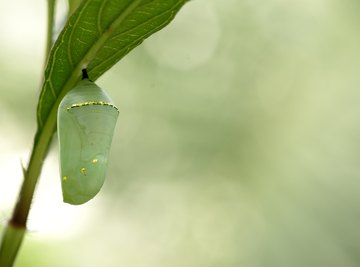
Caterpillar cocoons are a pupal metamorphis stage that butterflies undergo before reaching their adult stage. During this time, they radically transform, evolving from a caterpillar to a butterfly. Most caterpillars spin their cocoons from tree branches, while others create them in areas where they know they are not going to be disturbed, such as the roof of a home or in thick brush or bushes. Cocoons often have unique features that make it possible to identify the creature inside.

Instructions

    • 1

      Identify the covering of the cocoon. Most moths and butterflies come from pupa that hang from tree branches as silk padding. These cocoons are typically white or translucent, depending on what stage of metamorphosis the caterpillar is currently in.

    • 2

      Identify the color of the cocoon. Most cocoons, regardless of the species inside, begin as a white color and eventually become brown. Other cocoons may turn green. Butterfly cocoons typically have a pupa that begins as white and becomes translucent green over time, while other insects, like beetles, have brown cocoons, or cocoons that remain white during the entire transformation phase.

    • 3

      Examine the cocoon's actual shape for clues as to what type of insect is transforming inside it. Most moth and butterfly cocoons are an oval shape, and they have a natural structure that begins smaller on one end and then gradually grows in size until reaching the other end. The side that is the smallest on the cocoon is the side that hangs from the branch. Other insects create unique cocoons that vary in size and shape depending on the species of the insect.

    • 4

      Examine the nearby area to see if there are any adult insects of the same species nearby. Butterfly and moth cocoons are typically guarded and protected by ants, so locating ants nearby is an indication that the insect inside is a moth or butterfly. Other insects that utilize cocoons for their transformation are typically guarded by adults of the same species.

    • 5

      Take note of whether there is a shell covering. Only a few insects actually use a shell covering that they can protect themselves with during the pupa stage, and moths are one of these species. The shell is designed to break open eventually. Butterflies, on the other hand, do not utilize a hard shell coating; their cocoons are soft and silky.

Related Searches:

References

  • Photo Credit Jupiterimages/Photos.com/Getty Images

Comments

You May Also Like

  • How to Identify Cocoons

    Most people think that cocoons are the encasements used by caterpillars to go through metamorphosis into butterflies. Actually, cocoons are the casings...

  • How to Identify Cocoons and Insects

    The process of identifying cocoons and insects can be tricky. However, learning how to identify certain characteristics helps to make the entire...

  • How to Identify Cocoons on Trees

    Caterpillars which turn into moths make cocoons using a thick material they produce in two rear glands. The caterpillars of each moth...

  • How to Take Care of a Butterfly Cocoon

    Taking care of a butterfly cocoon or chrysalis requires putting it in a large container in the springtime until it hatches or...

  • How to Identify Pupa

    A pupa is a metamorphis stage that a hemimetabolous insect--such as butterflies, beetles, wasps and bees--must go through before reaching the adult...

  • How to Identify a Butterfly Cocoon

    Butterflies are not born the beautiful insects that we see flying around our gardens. They start as caterpillars just like moths do,...

  • How to Identify Cocoons of the Southwest

    Is it a dried up leaf, a pebble or a cocoon? Or is it a butterfly's chrysalis? Identifying cocoons in the deserts,...

  • How to Identify a Chrysalis or Cocoon

    So, you've found little sacs of something hanging from leaves or branches and wonder if it could be caterpillars' shelters for moths...

  • How to Know If a Caterpillar in a Cocoon Is Dead

    Caterpillars, before turning into butterflies and moths, remain in a cocoon from a few days or weeks to even a few years...

  • Cocoons That Hang in Trees

    Cocoons That Hang in Trees. Some insects go through a metamorphosis process, where they change from an immature form into a mature...

  • Kinds of Cocoons

    A cocoon is a protective shelter around an insect. It is made from fibrous material such as silk. The cocoon resembles a...

  • Can a Caterpillar Die in the Cocoon?

    Caterpillars can die in the cocoon stage when certain insects pierce or chew through the cocoon in order to get to the...

  • Cocoons on Apple Trees

    These "cocoons" on apple trees are the nests of a North American pest called the Eastern tent caterpillar. The tents are woven...

  • How to Tell the Difference Between a Pupa and a Cocoon

    Among insects, butterflies and moths are unique, transforming through four distinct life stages. These four stages include embryo, larva, pupa and imago....

  • Evergreen Bagworm Cocoons

    Evergreens are attacked by a number of pests, but one pest is particularly damaging to the health of the tree. Bagworms are...

  • Butterfly & Moth Cocoons

    One of the most notable phases of the life cycle of the butterfly or moth is when it goes from the wormlike...

  • How to Identify Earthworm Eggs in Soil

    Earthworms lay eggs inside amber-colored cocoons their bodies produce. Premature eggs that come out of their protective cocoons will shrivel and die....

  • How to Hatch a Cocoon

    Caterpillars spin cocoons, and while they are inside the cocoons, they change into butterflies or moths. The process of watching a butterfly...

  • Killing Flea Pupae

    You've tried everything to rid your life of those pesky little fleas, but they just keep coming back. Traditional flea treatments only...

Related Ads

Featured