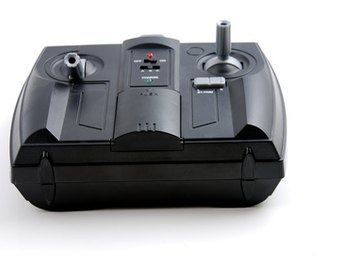

Building a Remote Control (RC) car for a science project is one of the ways you can explore electronics, radio control, and motors. You can put together an RC car using all of these components, and you can make one using your own parts or parts you get from a kit. Either way, you can explore the various RC components for your science fair.
From a Kit
Choose a topic question about RC cars that your science fair project will answer (science fair projects are generally presented as the answer to a question). Questions you might ask include, "How do RC cars work?" or "Can you make an RC car from a kit in less than 20 minutes?"
Choose an RC car kit that you can build. Make sure the kit has a decent amount of parts and is something you'll be able to put together on your own. You'll want one that actually has pieces to put together, and not just a body and motor. You should need to attach wires, hook up the motor, glue on the body, attach the wheels, and set up the antenna.
Put the RC car together according to the kit, and document the assembly process. Take pictures as you hit each step, so you have an illustration of what the car looks like at different stages of being put together.
Do tests on the RC car, such as running the car at various speeds or through various courses, to collect the data you need for your experiment.
Write up your experiment, your data, and your conclusion for your presentation.
From Parts
Set up an experiment in building an RC car from scratch.
Decide on the type of motor you need, whether it is electric or nitro. You'll also need to decide on the types of wheels, body, and RC equipment that you would like.
Put together the pieces of the RC car, and document the process. You will need to assemble the base of the body, and the motor or battery inside of the base. Attach wires from the motor to the battery and into the base. Put a top on the car, add wheels, and set up the antenna. Use directions for a model kit, or find exact directions in a book or online. Take pictures as you put the car together, and document each of the steps.
Display the solutions that you have come with, and put everything together on your school board for a display.
Try different parts arrangements with your model car. Exchange a nitro motor for an electric one, or try big wheels on the back or bigger wheels on the front. Try different weights of bodies, different sizes of bases, and different paint types to see how fast the cars go or how they handle after you have made these changes.
References
Photo Credits
stock pictures of a remote control used for airplane play image by Albert Lozano from Fotolia.com