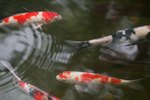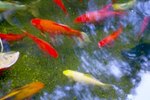

A beautiful koi pond will create a peaceful sanctuary either for your backyard or indoors. Yet koi fish require more supplies than the typical goldfish in a bowl, as they will grow to an average of 21 inches at maturity and live 25 to 35 years. All the components needed to set up a pond are essential to maintain healthy koi and clean water.
Water
The ideal pond will contain at least 10 gallons of water per inch of fish. This means you need to provide 210 gallons for each fish you purchase as this will be the amount needed when they reach maturity. The pond must also be at least 3 to 4 feet deep so the koi can retreat to the cooler water below in warmer weather.
Liner
The koi pond cannot just be a simple hole in the ground. Instead, liners protect the integrity of the water from environmental factors. For outdoor ponds, the liner should peak a minimum of 6 to 12 inches above the ground. Often made of plastic, fiberglass or rubber, liners can either be preformed or flat and unformed, ready for you to shape as needed.
Filtration System
There are a few components in a filtration system that are necessary to keep the water clean. The system may be a bead filter or biofilter, appropriate for the specific size of your pond. A skimmer pump drives the system and should be able to run efficiently over a long period of time. Setting up a drain in the bottom of the pond, similar to that of a swimming pool, assists in removing waste when changing the water.
Mechanically Made Oxygen
Incorporating a waterfall or bubbling fountain circulates the water, not only preventing it from freezing in colder months but also oxygenating the water. This is extremely necessary in the summer months when koi will become more active and produce more waste. If at any time the pH of the water tests high in ammonia or nitrate, you will need an aeration kit and may need to partially change the water. You can also reduce ammonia by adding pond or aquarium salt.
Biologically Made Oxygen
Aquatic plants are not simply for decoration. A combination of deep-water plants, floating plants and marginal plants provide oxygen and shade for the koi, who in exchange feed the plants with their waste. However, the koi will try to eat the plant roots, so they must be protected by a barrier. Keep plants in pots, cover the base with rocks or use the pond liner material as a barrier.
Food
Pellet or flake food for koi should contain no more than 30 percent protein. Note that spirulina and carotene are the ingredients that enhance koi color. Keep an eye on the expiration date as old food often loses nutritional value. Seasonally supplement the koi diet with wheat germ, fruits, vegetables, shrimp and plankton. As odd as it seems, do not feed the koi when water temperatures dip below 40 degrees. The bio-filter in pond will shut down and the bacteria that koi use to digest their food will cease to work. The excess food in the pond will only create excessive algae, compromising the water's quality.
Additional Components
An ultraviolet light sterilizer, also known as a water clarifier, kills algae microorganisms and keeps the water clear. Depending on your area, you may need to protect your koi from predators. Netting will prevent birds from gaining access and electric fencing may be used to deter raccoons or bears.
References
Resources
Photo Credits
-
Digital Vision./Digital Vision/Getty Images
Writer Bio
Pam Smith has been writing since 2005. In addition to her work for Demand Media, her articles have been published online at CBS Local. She also wrote for the Pennsylvania Center for the Book's Literary Map while earning a Bachelor of Arts degree in English at the Pennsylvania State University. She is currently an editorial assistant for Circulation Research.