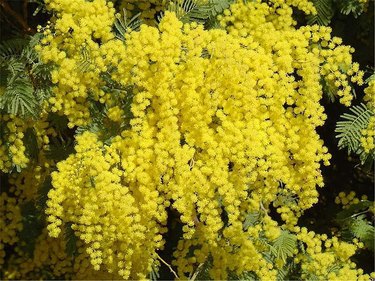
Is that tree with puffy, pom-pom flowers a mimosa (Albizia julibrissin) or an Acacia? Both are genera in the pea/legume plant family. Species within these genera can show such similarity that it is sometimes difficult to distinguish between them. But if you look closely, there are several ways to tell them apart.
Meet the Acacia
Video of the Day
Acacia is a large genus in the pea family, also known as the Fabaceae family, containing many different species of trees and shrubs. Native to very warm climates in Australia, acacia trees feature small, finely divided leaflets, giving them a feathery appearance. In Australia, these plants are called "wattles" but in most of the world they are referred to as acacias.
Video of the Day
In addition to their fern-like foliage, acacias also feature small, fragrant flowers arranged in clusters. These blossoms are most often yellow but can be white and do not resemble pea flowers. They have multiple stamens that make the flowers appear fuzzy. The more ornate acacia flowering species produce extremely showy flowers that make excellent cut flowers. These trees like warm weather climates like that in U.S. Department of Agriculture plant hardiness zones 9 through 11.
Meet the Mimosa
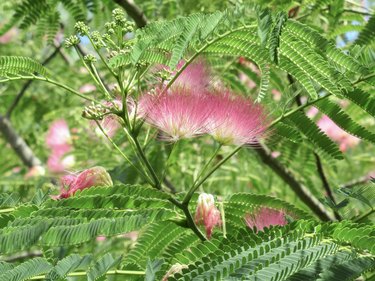
Mimosa is a common name for Albizia julibrissin, an extremely attractive and popular ornamental landscape tree that, unfortunately, has proved quite invasive. Native to China, the tree has been widely planted in Florida, among other warm states, where it has escaped cultivation and spread into wild areas. Mimosa is extremely flexible when it comes to soil and growing conditions and also grows very fast. It also produces a huge amount of seed pods.
Mimosa, or silk trees, grow to 25 feet tall and almost as wide, if left unpruned, growing up to 5 feet in a single season. The extremely showy pink flowers are very fragrant, and their sweet nectar attracts birds, butterflies, and bees. Like acacia blossoms, they do not resemble pea flowers. The foliage includes uniquely palmate leaves that look like tiny fern fronds and offer interesting texture in a garden landscape. These trees thrive in U.S. Department of Agriculture plant hardiness zones 6b through 9a.
Distinguish Between Acacia and Mimosa
Trees in both the Albizia and the Acacia genera belong to the huge legume family (Fabaceae). Most flowering plants in the pea family have pea-like blossoms, but this is not the case for plants in either of these genera. Both have showy, fragrant flowers and fern-like foliage. This is why both have been placed in the subfamily Mimosoideae.
However, there are differences between acacia and the silk tree that can help to distinguish one from the other.
- Silk trees generally hail from
China, while acacias are native to Australia.
- Mimosas usually produce pink flowers in terminal clusters, each looking like a small, fuzzy pom-pom. Acacia flowers are also pom-poms, but they are yellow or white.
- The delicate, puffy mimosa blooms appear in June or early July. Acacias flower in late winter or very early spring.
- Acacias can have thorns but mimosas do not.