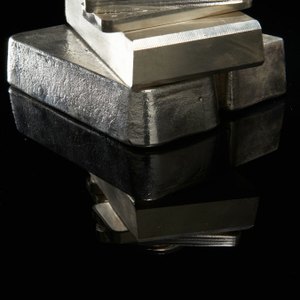


Silver bars range in weight from 5 grains up to 100 troy ounces. Manufacturers identify their bars with a logo, serial number, hallmark or pattern in addition to the weight and industry standard for purity of “.999 Fine Silver.” Bars are also known by the way they are manufactured. Older silver bars were poured into a mold to produce a loaf shape. Other methods of manufacture include extruded, struck, stamped and CNC (computer numerical controlled), which is used only by Academy Silver to produce a precision cut bar that is identical in shape and size with interlocking grooves for stacking.
Identify the silver bar’s manufacturer by the name on the bar. Typical silver makers include: Engelhard, Heraeus, Sunshine Minting, Johnson Matthey, SilverTowne, Pan American Silver Corp. and Royal Canadian Mint. Some bars have a pattern on the back featuring the producer’s name.
Look for a serial number that identifies when the bar was produced. Engelhard stamps a serial number on their extruded bars below their logo as does SilverTowne.
Determine the weight of the bar. Weight is usually indicated on the front of the bar. Example: “10 Troy Ounce” or “10 TR OZ”, or “One Ounce Fine Silver”.
Identify how the bar was produced. Some silver producers are known for the way they make their bars. Stamped bars have clean consistent edges and usually raised lettering and a bright finish (Heraeus). Poured, extruded bars can take on a loaf shape with rounded corners and come in either a bright, matte or smooth finish (Engelhard, Johnson Matthey). Academy CNC bars have a very bright finish and smooth edges so that when another Academy bar is placed on top they lock together like Legos.
References
Writer Bio
Based in Washington’s Puget Sound area, Suzanne Geller has written about software, health and business since 1987. Her articles have appeared in “Entertainment News NW,” “Synergy for Success” and various trade publications. She holds a Bachelor of Arts in English from California State University at Northridge.