

How to Cut Limestone Blocks

Limestone is mined in large slabs for a variety of construction purposes including building walkways, foundations and even as the primary wall material for buildings. Since limestone blocks sell in standard sizes, you must cut them to fit in your desired project area.
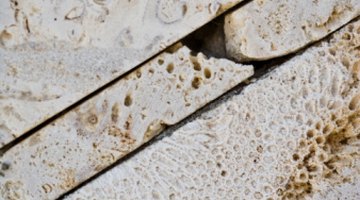
Cutting a limestone block may seem daunting but it doesn't have to be with the right saw and cutting blade.
Things You Will Need
- Tape measure
- Pencil
- Dust mask
- Safety glasses
- Angle grinder
- Masonry cut off disk
- Chisel (optional)
- Hammer (optional)
-
Measure the location where the block will be installed.
-
Transfer the desired width or height onto the limestone block using the tape measure and a pencil.
-
Insert a masonry cut off disk into an angle grinder using the grinder's instructions.
-
Put on a dust mask and safety glasses and turn on the grinder. Lower the blade toward the pencil line on the block and hold the grinder steady as it cuts through the limestone. Continue until you have cut all the way through the pencil line on one side of the limestone block.
-
Turn the block over and repeat the process to cut through the other side in the same manner. Depending on the thickness of the block, it may split into two parts after this second cut.
-
Insert a chisel into the cut line of the limestone. Tap the top of the chisel firmly with a hammer to split the remaining limestone apart.
The Drip Cap
- Limestone is mined in large slabs for a variety of construction purposes including building walkways, foundations and even as the primary wall material for buildings.
- Transfer the desired width or height onto the limestone block using the tape measure and a pencil.
References
Writer Bio
Kimberly Johnson is a freelance writer whose articles have appeared in various online publications including eHow, Suite101 and Examiner. She has a degree in journalism from the University of Georgia and began writing professionally in 2001.
Photo Credits
- Jupiterimages/Photos.com/Getty Images
- Jupiterimages/Photos.com/Getty Images
More Articles

