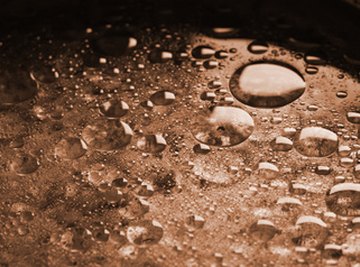

Separating emulsified oil from water, two immiscible (non-blendable) liquids, can have a range of different applications. In the case of an environmental disaster, such as a coastal oil spill, efficient, fast removal of the oil component from the water-oil emulsion is critical in the clean-up and recovery of the surrounding area. Another example involves sewer systems that use special cleaning fluids to wash out the process equipment. Removing oil contaminants from cleaning fluids enables to cut back on the amount of fluid used, which cuts costs and decreases the impact on the environment. Mechanical separation, including gravity separation and coalescence, is used is each case.
- Industrial centrifuge
- Ultrafiltration membrane
- Siphon
- Salt or a polymer plus acid
- Skimmer
Decide if water is on your side or not. This depends on the types of processes you are attempting to carry out. If you want to clean waste water and make it usable again, you need to prioritize the water element of your mixture. If water works against the process you deal with, and attracts other contaminants, such as oxide insolubles or micro-organisms, prioritize the oil component of the emulsion.
Ensure the chemicals you use comply with international standards of safety and environmental care.
Use gravity to separate your oil and water emulsion. Centrifuge the two substances together. The heavier liquid will reach the bottom first and stay there, while the lighter of the two will remain in a layer on the top. High G-forces are required. Vacuum the oil dry to reduce the partial pressure. Reducing the pressure of a liquid means that the liquid boils sooner than it would at normal pressure. Because water boils at a lower pressure than oil, it begins boiling earlier than oil, so more readily evaporates and can therefore be removed at an earlier stage.
Consider ultrafiltration if mechanical separation will not work. Ultrafiltration works like a kidney dialysis machine. The membrane inside an ultrafiltration machine only allows molecules of certain sizes to pass through its “pores,” creating what is known as “selective filtering.” By placing the oil and water emulsion into the ultrafilter and allowing it selectively pass through the membrane, complete separation of the two substances will occur, resulting in one half oil (not able to pass through) and one half water (small enough molecules to pass through). You must not allow the two halves to re-integrate, so make sure you siphon off the water
Chemically treat the emulsified oil and water mixture. Destabilize the two components by adding either a salt or a polymer plus acid. The salt acts on the emulsified oil in much the same way as bile salt breaks down fatty substances we ingest, by bonding to its outer coat and breaking it up. Allow the oil and water to naturally draw apart over a period of a few hours. Use a skimmer to lift the oil layer off the surface of the water.
Treat waste water which contains smaller droplets of emulsified oil using flotation, an adsorptive bubble separation technique. During the process, fine air bubbles are injected across the surface of the oily emulsion. The oil agglomerates, or sticks, to the air bubbles in the added presence of a surfactant (a chemical which enhances the adherence of the two components, air and oil). The air and oil create a foam-like layer on the surface of the increasingly clean water. The foam is then skimmed from the surface using a large, mechanical skimmer. Flotation can separate water from emulsified cutting oil, machine lubricant and white spirit.
Separate old oil from water with more forceful procedures, such as high centrifugal separation hydrocyclone technology (Ultraspin uses forces of more than 1,000 times that of natural gravity). Old oil is oxidized to a greater extent than new or “fresh” oil, and therefore has what are known as “hooks,” which can more readily attach themselves to water molecules. Old oil emulsifies in larger amounts of water, so more powerful methods are required to get the water out.
Things You'll Need
Tips
Warnings
Tips
- Decide if water is on your side or not. This depends on the types of processes you are attempting to carry out. If you want to clean waste water and make it usable again, you need to prioritize the water element of your mixture. If water works against the process you deal with, and attracts other contaminants, such as oxide insolubles or micro-organisms, prioritize the oil component of the emulsion.
Warnings
- Ensure the chemicals you use comply with international standards of safety and environmental care.
About the Author
Natasha Parks has been a professional writer since 2001 with work published online and in book format for "Thomson Reuters," the "World Patents Index" and thomson.com. Her areas of expertise are varied and include physics, biology, genetics and computing, mental health, relationships, family crises and career development. She holds a Bachelor of Science in Biophysics from King's College, London.
Photo Credits
Abstract image of oil drops in water image by George Dolgikh from Fotolia.com