Things You'll Need
Bowl
Pastry blender
Table knives (optional)
Food processor (optional)
Electric hand mixer (optional)
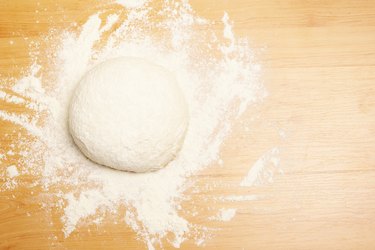
The best pie crusts and biscuits are ones that are flaky, tender and melt in your mouth. The key to making short doughs (made without yeast) such as these is to cut in the proper amount of fat, such as butter or shortening, so that pockets form when the dough is baked, creating the desired pastry. Shortening, which is almost always hydrogenated vegetable oil, can be cut into dough in several ways, including with the use of a pastry blender, knives, or even your fingers.
Step 1
Chill the shortening in the refrigerator if time allows. Use the correct amount of shortening for your recipe.
Video of the Day
Step 2
Cut the shortening into fingertip-size pieces and add to the mixing bowl with the dry ingredients. Shake the bowl well or gently mix with your fingers to get the shortening pieces covered in the flour mixture.
Step 3
Hold the pastry blender around the handle and press the blades into the flour/shortening mixture. Use the pastry blender in this manner all the way around the bowl until the shortening resembles flour-covered pieces of rice -- the dough should look crumbly at this point.
Step 4
Use two table knives if you do not have a pastry blender. Hold a knife in each hand and make slicing motions into the flour/shortening mixture. Continue cutting until the dough appears crumbly.
Step 5
Mix the dough mixture gently using your fingers as an alternate way to cut the shortening into the flour. Hold your hand in a claw shape and swirl it around the bowl quickly until a crumbly dough appears. Work fast so as to not melt the shortening from the heat of your hand. Run your hand under cold water for a few seconds, then dry thoroughly before mixing the dough.
Step 6
Use a food processor to cut the dry ingredient blend with the shortening. Add your flour to the food processor bowl, then add the shortening in small chunks. Pulse the food processor a few times until the dough turns crumbly.
Step 7
Use an electric hand mixer to cut the shortening into the flour mixture. Place the flour into a bowl. Turn the hand mixer on low speed and slowly add the shortening, one fingertip-size chunk at a time. Mix slowly until a crumbly dough appears.
Video of the Day