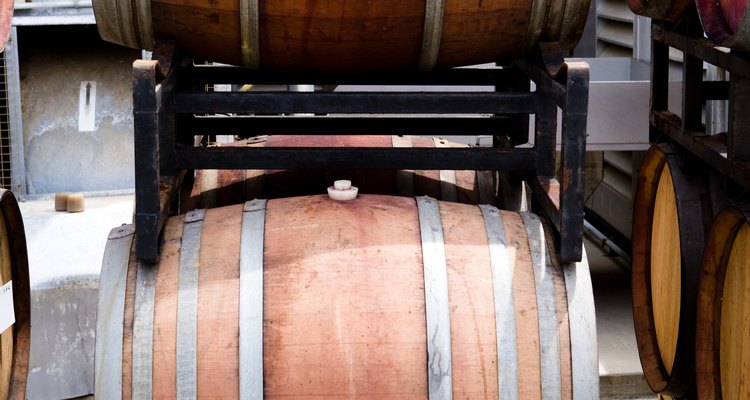
Brandy and whiskey are two of the most famous spirits in the world. Brandy, which means "burnt wine," is made from grape liquor. If you have had cognac or armagnac, then you have sampled this French spirit. Single-malt scotch is one of many varieties of whiskey. Although it originated in Scotland, whiskey is now produced all over the world. It is made from malted barley and aged in oak barrels. Brandy and whiskey have distinct tastes; you can order them in bars almost anywhere to see which you prefer.
Starting Ingredient
One of the most significant distinctions between brandy and whiskey is the grain used during the fermentation process. All alcohols use a grain, fruit or other starch as a base. Brandy is made from fermented wine. Whiskey, on the other hand, is made from fermented grains. Traditionally, most whiskies are made from barley. Because the starting ingredients for brandy and whiskey are different, the end products each have a distinct flavor and taste.
Labeling
Reading the labels for whiskey and brandy can be confusing at first. Whiskey has the number of years it was aged printed on the label. Some common ages for whiskey are three, five 10, 12, 15 or 18 years. Older whiskies are available though they are rare and often expensive. Brandies have ratings like VS, VSOP, and XO. VS stands for very special and is aged in casks for at least two years. VSOP stands for very special old pale and means that the youngest brandy is aged at least four years but that the average age of the brandies is much older. XO means extra old and is aged between six and 20 years in a cask.
Production
Making whiskey starts by malting barley. This is a process of combining barley with water and allowing this mash to convert into the sugars used in the fermentation process. Then the mixture is combined with water and yeast and distilled twice. Depending on the exact type of whiskey, it can be aged in several ways. Whiskey is most commonly aged in oak barrels. Brandy starts with a grape mash rather than with malted barley. It is distilled by cooking the wine and then allowed to age in wooden casks.
Famous Varieties
The most famous brandy in the world is cognac. Like many French spirits and wines, cognac is named for the region where it is produced. This region is on the west-central Atlantic coast of France. Armagnac is an older variety of brandy also commonly found in France. Brandies are usually blends of different types of grapes or wines. The most common form of whiskey is scotch. Single-malt scotch means that it is made with a single type of grain from one specific region.
Related Articles

Taste Differences in Single-Malt vs. ...
The Difference Between Single Cask & ...

What Liquors Are Made From Sugar Cane?

How Much Is a Single Serving Size of a ...

List of the Different Types of Champagne
Is Cabernet Sauvignon a Substitute for ...

What Is the Difference Between Wine & ...

What Is the Primary Difference Between ...

Tanqueray Gin Ingredients

What Does VSOP Mean?

Can You Substitute Rum for Brandy?
Can You Use Creme De Cassis As a ...

How to Make Blackberry Brandy

German Beer Vs. American Beer

How to Make Alcohol at Home

Alcohol Content: Proof vs. Percentage ...

What Is a Good Substitute for ...

Can I Substitute Rum for Bourbon in ...
The Difference Between Brown and White ...

What Types of Cheeses Are Unpasteurized?
References
Writer Bio
Stacy Zogheib's writing has been published in various online publications including Demand Studios and Our Everyday Life. She has written on topics including family, careers, and work-life balance. She has a Bachelor of Arts in elementary and special education from Wittenberg University in Springfield, Ohio and a Master's degree in Early Childhood Education from Northern Arizona University.
Photo Credits
Jupiterimages/Photos.com/Getty Images