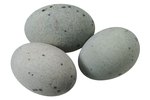
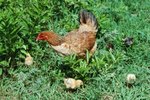
Hatching and rearing baby chicks is an interesting and fun practice for the pet chicken owner. The first step is a no-brainer: Find fertile eggs. Eggs from backyard hens are only fertile if there is a male rooster present, and if the rooster and hens have copulated. If you don't have hens laying fertile eggs, you'll need to purchase eggs from a hatchery, feed supply store or a poultry farm.
The Best Fit to Sit
Once you have your eggs, you will need to incubate them within a week of being laid. You can hatch in one of two ways: through a broody hen or in a home incubator. While a broody hen does an excellent job, an incubator allows you more hands-on control of the hatching process, and an eyewitness account without needing to pester a hen.
If you do choose to hatch under your hen, you will want to build an isolated brood box for her and the eventual chicks. Set the nest with golf balls or artificial eggs to encourage her to nest in the box. Once she's comfortable, and sitting on the nest every day, you can swap the eggs to your fertile hatchers.
Warnings
Don't set your broody hen with more eggs than she can handle; if the clutch is too big, the eggs on the outer rim will lose temperature and the embryos may die. Research your hen type to learn her typical clutch size, and when in doubt go with fewer eggs at a time.
An incubator is simply an enclosed space that offers controlled temperature, humidity and air vents. Commercial incubators will have instructions included; it's important to follow them exactly, as manufacturers may have differing methods of incubation. If you are using an incubator you've constructed, set it up and check the thermometer frequently before introducing the eggs, to ensure that the variables inside the incubator remain consistent. The temperature in the incubator will need to stay between 99 and 102 degrees Fahrenheit to hatch the eggs.
A Fresh Start at Life
Chicks will hatch within a 24-hour window; any later and the less likely it is that the chick will survive. Keep the chicks in the incubator until they have fluffed up and completely dried. The incubator can be used for newly hatched chicks, but the temperature will need to be lowered to around 95 degrees. You can reduce this temperature 5 degrees weekly until the chicks are at room temperature.
Feed the new baby chicks a starter mash; commercial starter mashes usually can be purchased at the same place you obtained your eggs. If you've hatched under a broody hen, she will teach the chicks to forage and peck for live insects and plants -- such as clover -- in addition to the starter mash. Before feeding the chicks, however, make sure they are drinking water. You can encourage them to drink by dipping their beaks in a container of clean water.
If the chicks begin to pick at their fluff, increase their ventilation. Around 3 to 6 weeks of age they'll go through an "ugly phase" as they lose their fluff and begin to grow their feathers. Keep the chicks in an enclosed area until they are roughly 5 weeks of age, as they are still too young to be out alone before this. Don't keep baby chicks in any kind of plastic container, however, as the heat from a heating lamp or device may melt the plastic. Other accouterments you may want to add are:
- Roosting rods or bricks
- A container of sand for dusting
- Newspaper or wood shavings
- A chick fountain
- Antibiotics or medicated feed
Baby chicks can be switched to a grower feed at 9 weeks of age. By 20 weeks of age, the chicks will be full grown into roosters or hens, and the hens can move on to laying feed. Rooster and hen chicks can stay together until the hens begin laying, around the 20-week mark. At that time, unless you'd like more baby chicks running around, be sure to separate out your new flock.